Why Cash for Gold Scams Are Surprisingly Common
The Indian cash for gold market is huge – over 25,000 tonnes of household gold, with hundreds of thousands of transactions every month – and most of it operates fairly. But a meaningful minority of buyers exploit information asymmetry: they know how XRF testing works, they know the IBJA rate, they know fair deductions; the seller often doesn’t. The result is a 5–15% underpayment that the seller may never realise, especially if it’s their first time. This guide walks through the specific cash for gold scams to watch out for, the red flags that signal trouble, and the practical checks that protect you.
The good news: spotting a problem buyer is straightforward once you know what to look for. The bad news: most first-time sellers don’t know what to look for, which is exactly what unfair buyers count on. Read this once before any cash for gold transaction, and you’ll save yourself from the most common forms of underpayment.
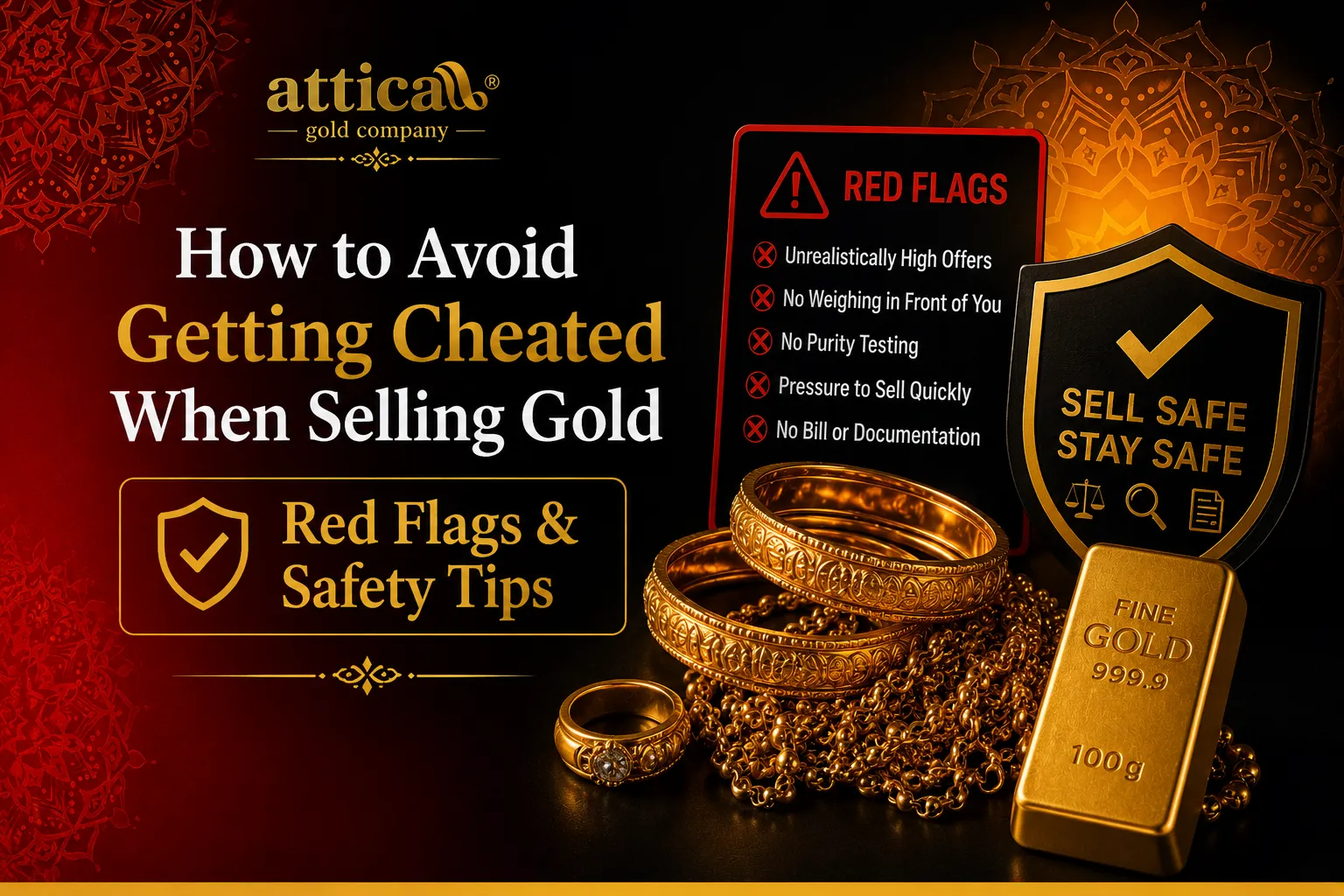
The 7 Most Common Gold Buyer Scams
- Weighing scale tampering – Some buyers use uncalibrated scales that read 5–10% lower than actual weight. Always verify scale tares to zero with nothing on it; ask to weigh a small standard object (a coin) for sanity check.
- Fake low-purity reading – Without XRF testing, the buyer ‘estimates’ purity by visual inspection or touchstone, conveniently testing as 18K when it’s actually 22K. Insist on XRF; refuse touchstone-only.
- Inflated stone deduction – Buyer claims your piece has ‘3g of stones’ when it’s actually 1g. Watch the stone removal happen; insist on weighing stones separately and returning them.
- Hidden percentage cut – Buyer applies a flat ‘5–10% cut’ without explaining what it covers. Reputable buyers itemise everything; flat cuts are the #1 underpayment mechanism.
- Quoted rate below IBJA – Buyer quotes ₹200/g below today’s published IBJA rate without justification. Compare every quote against IBJA before signing.
- Pressure tactics – ‘This rate only valid today’ or ‘My owner is leaving in 30 minutes’. Reputable buyers give you time to compare; pressure means they want to close before you discover better options.
- Door-to-door / roadside buyers – No fixed address, no records, no recourse if disputed. Always sell at a permanent branch with CCTV.
How to Identify a Trusted Gold Buyer
A trusted gold buyer has visible markers that take 2 minutes to verify before you walk in:
- Permanent physical branch with signage, CCTV, and visible IBJA rate display.
- Google reviews: 4.0+ stars, 100+ reviews, mentions of XRF testing and transparent pricing in recent reviews.
- Registered business: GST registration number visible on receipts; certificate of incorporation displayed.
- ISO certification (9001:2015) – voluntary but signals process quality.
- Public website with today’s rate published and KYC requirements listed.
- Multiple branches under same brand – single-branch operators can be legitimate but multi-branch chains have additional accountability.
These markers don’t guarantee fair treatment, but they correlate strongly with it. If three or more are missing, find another buyer – there are too many trusted alternatives to risk an opaque transaction.
Pre-Visit Checklist: How to Sell Gold Safely
- Check today’s IBJA rate (10 AM and 5 PM publications) – note the 22K and 24K per-gram rate.
- Search the buyer on Google Maps; read 10–20 recent reviews specifically for ‘price’ and ‘XRF’ mentions.
- Confirm the buyer’s permanent address; verify GST registration on their website or receipts.
- Carry original documents (Aadhaar, PAN if >₹2L) plus original bill if available.
- If transaction is large (>₹5L), consider visiting two buyers and comparing written quotes – same-day comparison is the strongest protection.
- Photograph or video the weighing and XRF test if the buyer permits – most reputable buyers don’t object.
Best Place to Sell Gold: Comparing Buyer Types
| Buyer Type | Typical Pricing | Scam Risk | Verdict |
| Dedicated gold buyer (chain) | Closest to IBJA | Low | Best – fair price, low scam risk |
| Large jeweller | Live rate as store credit | Low–Medium | OK if exchanging |
| Small jeweller | 1–5% below IBJA | Medium | Acceptable for small transactions |
| Pawn shop | 5–15% below IBJA | High | Avoid except urgent need |
| Roadside / door-to-door | Variable, often very low | Very high | Avoid completely |
The best place to sell gold for fair value is consistently a dedicated gold buyer with multiple branches, transparent IBJA pricing, XRF testing, and ISO certification. Pawn shops and roadside dealers exist for very urgent or very small transactions but are not where you take a meaningful amount of family gold.
- Also Read: Live Gold Price Today
💰 Get the Best Price for Your Gold Today
Instant valuation • Transparent pricing • 100% secure & trusted
Gold Weighing Scale Accuracy: What to Verify
Gold weighing scale accuracy directly affects the cash for gold you receive. Indian Legal Metrology rules require buyer scales to be certified annually – the certificate (often a sticker on the scale) shows the inspection date and validity. Before placing your gold on the scale, verify:
- Scale displays to 0.01g (centigram) precision – minimum standard for gold.
- Tare button works: empty scale reads 0.000g; if it shows residual weight, demand re-zeroing.
- Certification sticker is current (within last 12 months).
- Scale is on a level surface – slight tilts can affect readings on lower-end scales.
- Test with a known weight if you brought one (a 10g coin standardises easily).
If the buyer refuses any of these basic checks, walk away. Gold weighing scale accuracy is fundamental – a 5% scale error on a ₹5L transaction is ₹25,000 lost.
What to Do If You Suspect You’ve Been Cheated
If after the sale you suspect underpayment: (1) take a photo of your written quote/receipt before leaving the buyer; (2) calculate independently what the fair price should have been (weight × purity × IBJA rate); (3) if the gap is >5%, complain to the buyer’s customer service first – reputable chains have escalation processes; (4) for clear fraud (scale tampering, fake purity), file a complaint with the Consumer Forum and the local police; (5) post an honest review on Google and JustDial – this protects future sellers.
Most underpayments are small enough (1–3%) that recovery isn’t practical, which is why prevention matters more than recourse. Reading this guide once, applying the checks consistently, and choosing a trusted gold buyer from the start saves more than any post-sale complaint process can recover.
Why Choose Attica Gold for Safe Cash for Gold
How to sell gold safely comes down to choosing a buyer whose entire business model depends on fair, transparent pricing – not one that profits from one-time underpayment. Reputable dedicated gold buyers know that customers compare quotes, post reviews, and bring repeat business; their incentive structure aligns with fair pricing. Unorganised dealers depend on first-time, uninformed sellers – their incentive structure is exactly the opposite.
Attica Gold has built its 200+ branch network across South India around exactly this principle. ISO 9001:2015 certified processes, calibrated XRF testing in your presence, today’s live IBJA rate displayed openly, line-by-line written quotes, and instant payment in cash, UPI, or bank transfer – your choice. Permanent branches with CCTV at every location. If you’ve been hesitating to sell because you weren’t sure who to trust, your wait is over. Walk into your nearest Attica Gold branch today for a free, no-obligation valuation, and apply the checks from this guide – we’ll pass every one.
Frequently Asked Questions
What are the most common cash for gold scams in India?
Cash for gold scams include: weighing scale tampering, fake low-purity readings (without XRF), inflated stone deductions, flat percentage cuts without breakdown, quoting below IBJA rate, pressure tactics, and door-to-door buyers. Most underpayment happens through opacity – vague quotes, unexplained deductions, no written line-by-line receipt.
How can I find a trusted gold buyer when I sell gold near me?
A trusted gold buyer has: permanent branch with CCTV, 4.0+ Google reviews with XRF mentions, GST registration, ISO certification (voluntary but useful signal), transparent IBJA rate display, and written line-by-line receipts. Multi-branch chains add accountability. Avoid roadside, door-to-door, and single-location operators with no online presence.
How to sell gold safely without getting cheated?
How to sell gold safely: (1) check IBJA rate before visiting, (2) read 10–20 recent Google reviews of the buyer, (3) carry Aadhaar + PAN, (4) insist on XRF purity testing in your presence, (5) verify scale tares to zero, (6) demand line-by-line written quote, (7) reject flat percentage cuts, (8) take a photo of the receipt before leaving.
What is the best place to sell gold to avoid scams?
The best place to sell gold for safety is a dedicated gold buyer chain (multi-branch, ISO certified, IBJA-linked pricing, XRF testing). Large jewellers are also generally safe but often pay only as store credit. Avoid pawn shops for meaningful transactions and roadside/door-to-door dealers entirely.
How do I check gold weighing scale accuracy?
Gold weighing scale accuracy checks: (1) Scale displays to 0.01g precision, (2) tare button zeros the empty scale, (3) Legal Metrology certification sticker is current (within 12 months), (4) scale on level surface. Bring a known-weight reference if possible (a 10g coin) for sanity check. If the buyer refuses any check, walk away.
What gold buyer scams should I watch for at first visit?
Top gold buyer scams to watch for at first visit: untaxed scales, touchstone-only purity testing (no XRF), ‘flat percentage cut’ deductions without explanation, quoted rate visibly below IBJA, pressure to decide immediately, and refusal to provide written receipt. Any one of these is reason enough to walk away.
What should I do if I’ve already been cheated on a cash for gold transaction?
If you suspect cash for gold underpayment after sale: photograph the receipt, recalculate fair price (weight × purity × IBJA rate), contact buyer’s customer service if a chain (escalation often works), file Consumer Forum complaint for clear fraud, post honest review on Google/JustDial. Prevention is far easier than post-sale recovery.
Are online cash for gold services safer than physical buyers?
Online cash for gold can be safe IF the platform is registered, reviewed, and uses tracked logistics with insured transit. Risks: you don’t watch the XRF test happen, disputes are harder to settle, and unscrupulous online services can underprice and rely on customer fatigue. For meaningful amounts (>₹50K), in-branch selling at a trusted chain is generally safer.
How to sell gold safely if I’ve never done it before?
First-time how to sell gold safely: (1) read this guide first, (2) check IBJA rate online, (3) visit a multi-branch chain like Attica Gold with strong reviews, (4) bring Aadhaar + PAN + bill if you have it, (5) watch the XRF test and weighing happen, (6) demand line-by-line written quote, (7) accept payment via UPI or bank transfer for traceability. Beginners benefit from selling at well-reviewed chains rather than experimenting with smaller buyers.
Sources & References
This page references and is informed by the following authoritative sources. Last verified: May 2026.
[1] Daily Gold Reference Rate – India Bullion and Jewellers Association (IBJA). https://ibja.co/
[2] Legal Metrology Act, 2009 – Certification of Weighing Devices – Department of Consumer Affairs, Government of India. https://consumeraffairs.nic.in/
[3] BIS Hallmarking Standards & HUID System – Bureau of Indian Standards. https://www.bis.gov.in/
[4] Consumer Protection Act, 2019 – Government of India. https://www.indiacode.nic.in/
[5] PMLA Compliance for Bullion Trade – Financial Intelligence Unit India (FIU-IND). https://fiuindia.gov.in/
{ “@context”: “https://schema.org”, “@type”: “FAQPage”, “mainEntity”: [ { “@type”: “Question”, “name”: “What are the most common cash for gold scams in India?”, “acceptedAnswer”: { “@type”: “Answer”, “text”: “Cash for gold scams include: weighing scale tampering, fake low-purity readings (without XRF), inflated stone deductions, flat percentage cuts without breakdown, quoting below IBJA rate, pressure tactics, and door-to-door buyers. Most underpayment happens through opacity – vague quotes, unexplained deductions, no written line-by-line receipt.” } }, { “@type”: “Question”, “name”: “How can I find a trusted gold buyer when I sell gold near me?”, “acceptedAnswer”: { “@type”: “Answer”, “text”: “A trusted gold buyer has: permanent branch with CCTV, 4.0+ Google reviews with XRF mentions, GST registration, ISO certification (voluntary but useful signal), transparent IBJA rate display, and written line-by-line receipts. Multi-branch chains add accountability. Avoid roadside, door-to-door, and single-location operators with no online presence.” } }, { “@type”: “Question”, “name”: “How to sell gold safely without getting cheated?”, “acceptedAnswer”: { “@type”: “Answer”, “text”: “How to sell gold safely: (1) check IBJA rate before visiting, (2) read 10–20 recent Google reviews of the buyer, (3) carry Aadhaar + PAN, (4) insist on XRF purity testing in your presence, (5) verify scale tares to zero, (6) demand line-by-line written quote, (7) reject flat percentage cuts, (8) take a photo of the receipt before leaving.” } }, { “@type”: “Question”, “name”: “What is the best place to sell gold to avoid scams?”, “acceptedAnswer”: { “@type”: “Answer”, “text”: “The best place to sell gold for safety is a dedicated gold buyer chain (multi-branch, ISO certified, IBJA-linked pricing, XRF testing). Large jewellers are also generally safe but often pay only as store credit. Avoid pawn shops for meaningful transactions and roadside/door-to-door dealers entirely.” } }, { “@type”: “Question”, “name”: “How do I check gold weighing scale accuracy?”, “acceptedAnswer”: { “@type”: “Answer”, “text”: “Gold weighing scale accuracy checks: (1) Scale displays to 0.01g precision, (2) tare button zeros the empty scale, (3) Legal Metrology certification sticker is current (within 12 months), (4) scale on level surface. Bring a known-weight reference if possible (a 10g coin) for sanity check. If the buyer refuses any check, walk away.” } }, { “@type”: “Question”, “name”: “What gold buyer scams should I watch for at first visit?”, “acceptedAnswer”: { “@type”: “Answer”, “text”: “Top gold buyer scams to watch for at first visit: untaxed scales, touchstone-only purity testing (no XRF), ‘flat percentage cut’ deductions without explanation, quoted rate visibly below IBJA, pressure to decide immediately, and refusal to provide written receipt. Any one of these is reason enough to walk away.” } }, { “@type”: “Question”, “name”: “What should I do if I’ve already been cheated on a cash for gold transaction?”, “acceptedAnswer”: { “@type”: “Answer”, “text”: “If you suspect cash for gold underpayment after sale: photograph the receipt, recalculate fair price (weight × purity × IBJA rate), contact buyer’s customer service if a chain (escalation often works), file Consumer Forum complaint for clear fraud, post honest review on Google/JustDial. Prevention is far easier than post-sale recovery.” } }, { “@type”: “Question”, “name”: “Are online cash for gold services safer than physical buyers?”, “acceptedAnswer”: { “@type”: “Answer”, “text”: “Online cash for gold can be safe IF the platform is registered, reviewed, and uses tracked logistics with insured transit. Risks: you don’t watch the XRF test happen, disputes are harder to settle, and unscrupulous online services can underprice and rely on customer fatigue. For meaningful amounts (>₹50K), in-branch selling at a trusted chain is generally safer.” } }, { “@type”: “Question”, “name”: “How to sell gold safely if I’ve never done it before?”, “acceptedAnswer”: { “@type”: “Answer”, “text”: “First-time how to sell gold safely: (1) read this guide first, (2) check IBJA rate online, (3) visit a multi-branch chain like Attica Gold with strong reviews, (4) bring Aadhaar + PAN + bill if you have it, (5) watch the XRF test and weighing happen, (6) demand line-by-line written quote, (7) accept payment via UPI or bank transfer for traceability. Beginners benefit from selling at well-reviewed chains rather than experimenting with smaller buyers.” } } ] }Want to sell gold without worrying about scams?
Visit your nearest Attica Gold branch – ISO-certified processes, XRF testing in your presence, IBJA-linked pricing, line-by-line written quotes.
Get Instant Valuation
Free evaluation · No obligation · Instant offer
🔒 Your details are safe and confidential