
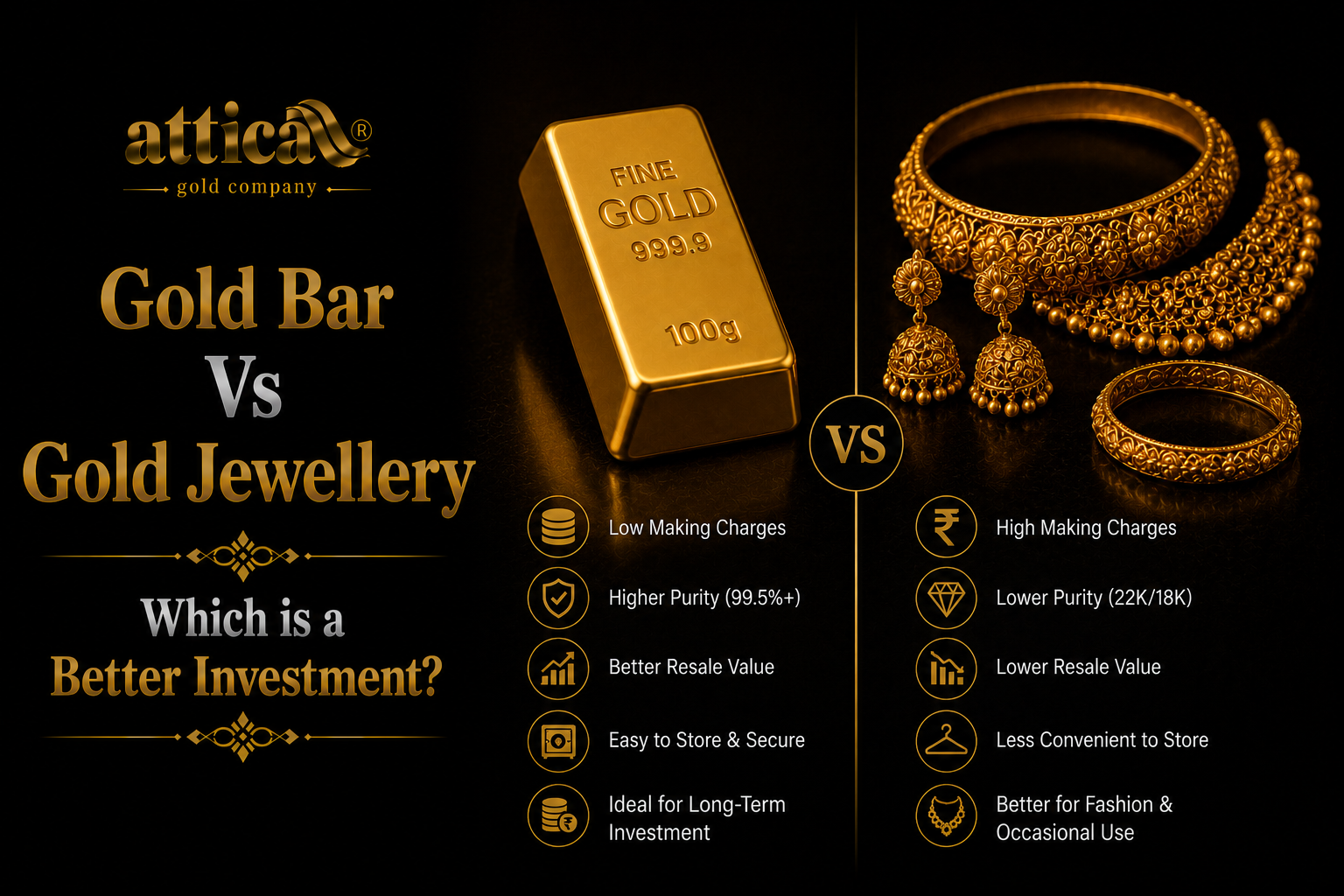
Gold has remained one of the most trusted assets for wealth preservation, cultural significance, and long-term financial security for centuries. In India especially, people purchase gold not only as an investment but also for weddings, festivals, gifting, and family wealth protection. However, many investors often struggle with one important question — Gold Bar Vs Gold Jewellery: Which is a Better Investment?
Although both represent ownership of physical gold, they differ significantly in terms of purity, pricing structure, resale value, storage efficiency, and investment purpose. Gold bars are primarily designed for investment and wealth preservation, while gold jewellery combines financial value with personal and cultural utility.
Understanding the difference between Gold Bar Vs Gold Jewellery is essential because the wrong choice may impact long-term returns, liquidity, and overall investment efficiency. Factors such as making charges, resale deductions, purity levels, and emotional value play major roles when deciding between these two forms of gold ownership.
Also Read: Live Gold Price Today
This comprehensive guide explains Gold Bar Vs Gold Jewellery in detail, including advantages, disadvantages, cost differences, resale considerations, and which option is better suited for different types of investors.
Understanding Gold Bars and Gold Jewellery
Before comparing Gold Bar Vs Gold Jewellery, it is important to understand how each form of gold functions as an asset. While both contain physical gold, their purpose, pricing structure, and usage differ considerably.
Gold bars are investment-focused bullion products usually available in high purity forms such as 24 karat. They are purchased mainly for wealth preservation and long-term investment purposes. Gold jewellery, however, combines gold value with craftsmanship, fashion, and cultural significance.
- Also Read: Live Gold Price Today
Because of these differences, the Gold Bar Vs Gold Jewellery comparison extends beyond price alone. Investors must also evaluate resale value, storage efficiency, emotional utility, and long-term financial goals before making decisions.
What Is a Gold Bar?
A gold bar is a refined bullion product manufactured primarily for investment purposes. Gold bars are generally available in high-purity forms and are produced by certified refineries or mints with standardized weight and purity markings.
Unlike jewellery, gold bars are not designed for decorative use. Their primary purpose is wealth preservation, portfolio diversification, and long-term asset security.
How Gold Bars Work
Gold bars operate as investment-grade bullion products whose value is closely linked to the international gold market price. Investors purchase bars mainly for long-term holding and wealth protection.
Key aspects that define how gold bars function include:
- High purity ensures investment efficiency: Gold bars are usually produced in high-purity forms such as 24 karat, allowing investors to maximize actual gold ownership with minimal non-gold components or alloy mixtures included.
- Pricing closely follows global gold rates: The value of bars is directly linked to international market prices, making valuation more transparent and easier for investors to track regularly.
- Lower fabrication costs improve value retention: Since bars involve minimal design and craftsmanship, they generally include lower premiums and making charges compared to decorative gold products available in retail markets.
- Standardized weights simplify valuation processes: Gold bars are manufactured in fixed weights, allowing easier pricing calculations, storage management, and resale transactions for both buyers and investors.
- Long-term wealth preservation remains primary objective: Investors purchase bars mainly for capital protection, inflation hedging, and portfolio diversification rather than personal or decorative usage purposes.
Key Characteristics of Gold Bars
Gold bars have specific features that make them suitable for investors focused on wealth preservation and long-term financial security.
Important characteristics of gold bars include:
- High purity levels increase investment value: Most bars are produced with very high purity standards, ensuring investors hold maximum gold content and minimizing deductions related to impurities during resale transactions.
- Compact storage improves security efficiency: High value concentration allows investors to store significant wealth within smaller physical space, reducing storage complexity and improving long-term handling convenience.
- Lower premiums support cost-efficient investment: Minimal craftsmanship requirements reduce additional charges, allowing investors to acquire more gold weight for the same financial investment amount.
- Strong liquidity supports easy resale transactions: Standardized bullion products are widely recognized in markets, making resale easier through banks, bullion dealers, and professional gold buyers.
- Limited emotional or cultural utility exists: Unlike jewellery, bars are primarily investment assets and usually do not provide decorative, ceremonial, or personal usage benefits for buyers.
Pros of Gold Bars
Gold bars offer several advantages for investors seeking stable and efficient physical gold ownership.
Key advantages of gold bars include:
- Lower making charges improve investment efficiency: Minimal fabrication and design costs reduce unnecessary expenses, allowing investors to maximize actual gold ownership within their investment budget effectively.
- Higher resale value retention over time: Because bars contain high purity gold with limited craftsmanship costs, investors often recover a larger percentage of their original investment during resale.
- Transparent pricing supports informed decisions: Market-linked pricing makes it easier for investors to track value fluctuations and compare rates across multiple sellers and buyers accurately.
- Efficient storage simplifies wealth management: High value density allows significant wealth storage in compact form, improving security and reducing physical storage requirements over extended investment periods.
- Suitable for long-term wealth preservation goals: Investors focused on inflation protection and portfolio diversification often prefer bars because of their strong investment-oriented characteristics and lower overhead costs.
Cons of Gold Bars
Despite their advantages, gold bars also have certain limitations investors should consider carefully before purchasing.
Key disadvantages of gold bars include:
- Higher upfront investment may limit accessibility: Purchasing bars often requires larger capital amounts compared to smaller jewellery purchases, reducing affordability for some retail investors initially.
- No decorative or personal usage benefits: Bars function purely as investment assets and cannot provide wearable, ceremonial, or gifting value unlike jewellery products.
- Storage security remains important consideration: Physical bullion still requires secure storage arrangements such as lockers or vaults to protect against theft or accidental loss risks.
- Smaller bars may include slightly higher premiums: Lower-weight bars sometimes carry proportionally higher fabrication costs compared to larger bullion bars available in wholesale investment markets.
- Emotional attachment and gifting utility are limited: Bars are purchased mainly for financial reasons and usually lack sentimental or cultural significance associated with jewellery ownership.
What Is Gold Jewellery?
Gold jewellery refers to decorative ornaments made using gold combined with other metals for durability and design flexibility. Jewellery is widely purchased for personal use, gifting, weddings, cultural traditions, and investment purposes. Unlike gold bars, jewellery combines financial value with emotional, aesthetic, and social significance, making it one of the most commonly owned forms of physical gold.
How Gold Jewellery Works
Gold jewellery functions both as a wearable asset and a store of value. Its pricing depends not only on gold content but also on craftsmanship, design complexity, purity level, and market demand within the jewellery industry.
Key aspects that define how gold jewellery functions include:
- Craftsmanship significantly affects final pricing structure: Jewellery pricing includes making charges, design complexity, labor costs, and branding expenses, which increase the total purchase amount beyond the underlying gold market value significantly.
- Purity levels vary depending on jewellery type: Jewellery is commonly available in different purity levels such as 18 karat, 22 karat, or 24 karat depending on design durability and market preference requirements.
- Cultural and emotional value influence purchasing decisions: Jewellery purchases are often connected with weddings, traditions, gifting, and family wealth preservation, increasing emotional significance beyond simple financial investment considerations.
- Resale value depends on purity and deductions applied: Buyers evaluate jewellery primarily based on gold content while deducting making charges, impurities, and possible wastage during resale valuation calculations.
- Daily usability creates practical ownership benefits: Unlike bars, jewellery can be worn regularly, combining financial value with personal, ceremonial, and decorative utility for owners and families.
Key Characteristics of Gold Jewellery
Gold jewellery possesses unique features that differentiate it from investment-focused bullion products such as bars and coins.
Important characteristics of gold jewellery include:
- Dual utility combines investment and personal usage: Jewellery provides both financial value and wearable functionality, allowing owners to enjoy decorative benefits while holding a valuable physical asset simultaneously.
- Making charges increase overall purchase cost: Buyers pay additional costs for craftsmanship, design, branding, and labor, increasing the final purchase price above the actual gold value considerably.
- Purity may be lower than bullion products: Jewellery often includes alloy metals to improve durability, meaning actual gold content may be lower compared to high-purity bullion bars.
- Strong cultural importance supports consistent demand: Weddings, festivals, and gifting traditions create continuous demand for jewellery, especially in countries where gold holds strong social and emotional significance.
- Resale deductions affect return efficiency: Making charges paid during purchase are usually not recovered fully during resale, reducing overall investment efficiency compared to bullion products.
Pros of Gold Jewellery
Gold jewellery offers several advantages beyond simple investment value, making it attractive for personal and cultural ownership purposes.
Key advantages of gold jewellery include:
- Wearable asset provides practical daily utility: Owners can use jewellery regularly while simultaneously holding a valuable physical asset that retains long-term financial worth and cultural significance.
- Strong emotional and sentimental value exists: Jewellery is often associated with family traditions, weddings, celebrations, and inheritance, increasing its personal importance across generations.
- Flexible purchasing options improve accessibility: Jewellery is available across various price ranges, allowing individuals to purchase according to budget, design preference, and financial capacity comfortably.
- High liquidity supports convenient resale opportunities: Jewellery can be sold through jewellers, gold buyers, and pawn services, providing relatively easy access to funds during emergencies or financial needs.
- Cultural relevance maintains long-term market demand: Consistent demand from weddings, festivals, and gifting traditions supports strong market activity and ownership popularity across many regions globally.
Cons of Gold Jewellery
Despite its popularity, gold jewellery also has several disadvantages from a pure investment perspective.
Key disadvantages of gold jewellery include:
- Making charges reduce investment efficiency significantly: Buyers pay substantial additional costs for craftsmanship and branding, but these expenses are usually not recovered during resale transactions later.
- Lower purity reduces actual gold ownership percentage: Alloy metals added for durability decrease the proportion of pure gold content compared to investment-grade bullion products available in markets.
- Resale deductions may lower overall returns: Buyers often apply deductions for impurities, wastage, and design-related factors when calculating resale value for jewellery items.
- Storage and theft risks remain important concerns: Jewellery requires careful storage and security arrangements because wearable items are more vulnerable to theft, loss, or accidental damage over time.
- Fashion trends may influence purchasing behavior: Changing design preferences can impact emotional satisfaction and market desirability even though intrinsic gold value remains relatively stable.
Gold Bar Vs Gold Jewellery: Top 10 Differences
Understanding the difference between Gold Bar Vs Gold Jewellery is essential for investors evaluating long-term wealth preservation, liquidity, and overall investment efficiency. Although both forms represent ownership of physical gold, they differ significantly in pricing structure, purity, utility, storage, and resale value. These differences directly influence financial returns, emotional value, and suitability for different investment goals.
Purity Level
Purity is one of the most important differences in the Gold Bar Vs Gold Jewellery comparison because it directly impacts actual gold ownership, valuation accuracy, and resale efficiency. Gold bars are usually manufactured in higher purity forms, while jewellery often includes alloy metals for strength and durability.
Why Purity Matters for Investors:
- Higher purity improves investment efficiency significantly: Gold bars generally contain higher pure gold content, allowing investors to maximize actual metal ownership while reducing deductions related to impurities during future resale transactions.
- Alloy mixtures affect jewellery purity levels: Jewellery often contains additional metals for durability and design flexibility, reducing overall pure gold percentage compared to investment-grade bullion products.
- Purity directly influences resale value calculations: Buyers evaluate resale value primarily based on actual gold content, making purity levels an important factor affecting final payout amounts received by sellers.
Making Charges
Making charges create one of the biggest differences between gold bars and jewellery from an investment perspective. Jewellery includes substantial craftsmanship costs, while bars involve minimal fabrication expenses due to simpler manufacturing processes focused mainly on investment efficiency.
Why Making Charges Affect Returns:
- Lower fabrication costs improve bullion investment value: Gold bars include minimal production expenses, allowing investors to acquire more gold weight for the same purchase amount compared to jewellery.
- Jewellery includes high craftsmanship expenses: Design complexity, labor, branding, and finishing increase jewellery prices significantly beyond the underlying gold market value at purchase.
- Making charges are rarely recovered fully later: Most buyers do not reimburse original craftsmanship costs during resale transactions, reducing overall investment returns for jewellery owners.
Resale Value
Resale value is one of the most important factors in the Gold Bar Vs Gold Jewellery comparison because it determines how much money investors recover when selling their gold. Gold bars generally provide better value retention due to higher purity and lower deductions, while jewellery often involves resale reductions linked to making charges and impurities.
Why Resale Value Matters for Investors:
- Higher purity improves overall resale efficiency: Gold bars are usually valued closer to current market rates because they contain high purity levels and involve fewer valuation deductions during resale transactions.
- Jewellery resale includes additional deductions: Buyers often deduct making charges, wastage, and impurity adjustments when calculating the resale value of jewellery products.
- Transparent bullion valuation supports better returns: Standardized bullion products simplify purity verification and pricing calculations, helping investors receive more accurate resale valuations consistently.
Investment Purpose
The purpose of ownership differs significantly in the Gold Bar Vs Gold Jewellery comparison because bars are primarily investment-focused, while jewellery combines financial value with personal, cultural, and decorative utility.
Why Investment Purpose Influences Buying Decisions:
- Bullion products prioritize wealth preservation goals: Investors mainly purchase bars for inflation protection, long-term wealth storage, and portfolio diversification rather than personal or decorative usage purposes.
- Jewellery combines emotional and financial value: Owners purchase jewellery not only for investment but also for weddings, gifting, celebrations, and cultural significance within families and traditions.
- Investment priorities determine product suitability clearly: Individuals focused purely on financial returns often prefer bars, while personal utility seekers may prioritize jewellery ownership benefits instead.
Storage Efficiency
Storage efficiency becomes an important consideration when evaluating Gold Bar Vs Gold Jewellery, especially for investors holding significant quantities of physical gold over long periods. Gold bars allow larger value concentration in smaller space, while jewellery often requires additional storage management and organization.
Why Storage Efficiency Matters:
- High value density improves storage convenience: Gold bars store significant financial value in compact form, reducing storage complexity and improving long-term security management efficiency for investors.
- Jewellery requires careful organization and protection: Multiple wearable pieces may require additional handling, packaging, and security arrangements compared to standardized bullion products.
- Efficient storage reduces long-term management challenges: Compact bullion holdings simplify wealth management and reduce the physical space required for safe storage solutions significantly.
Liquidity and Ease of Sale
Liquidity refers to how easily an asset can be sold and converted into cash. In the Gold Bar Vs Gold Jewellery comparison, both are relatively liquid assets, but resale conditions and pricing transparency may vary significantly.
Why Liquidity Influences Investment Decisions:
- Bullion products offer standardized resale processes: Gold bars are widely recognized investment products, making valuation and resale procedures simpler for professional buyers and bullion dealers globally.
- Jewellery resale depends on design and purity factors: Buyers may apply additional deductions related to craftsmanship, impurities, and design condition during jewellery resale evaluations.
- Market recognition improves transaction convenience: Standardized bars simplify pricing calculations and improve confidence during buying and selling transactions within formal bullion markets.
Pricing Transparency
Pricing transparency is another major factor in the Gold Bar Vs Gold Jewellery comparison because investors benefit from understanding how much they are paying above actual gold value. Bars generally offer more transparent pricing structures than jewellery products.
Why Pricing Transparency Is Important:
- Bullion pricing closely follows market rates: Gold bars are valued primarily based on weight and purity, making pricing calculations easier and more transparent for investors.
- Jewellery pricing includes multiple additional costs: Making charges, branding, craftsmanship, and retail margins increase complexity when determining actual underlying gold value within jewellery pricing.
- Transparent pricing supports informed investment decisions: Investors can compare rates more accurately when additional charges and valuation structures are clearly explained by sellers or buyers.
Emotional and Cultural Value
Emotional and cultural importance plays a major role in the Gold Bar Vs Gold Jewellery discussion because jewellery often carries sentimental significance beyond financial investment value. Gold bars usually do not provide similar emotional utility.
Why Emotional Value Influences Ownership:
- Jewellery carries strong sentimental importance: Family traditions, weddings, gifting, and inheritance often increase the emotional attachment associated with jewellery ownership significantly across generations.
- Bullion products remain purely investment-focused assets: Gold bars are purchased mainly for financial purposes and usually lack personal or ceremonial utility for owners.
- Cultural traditions maintain jewellery demand consistently: Festivals and social customs continue supporting strong long-term demand for jewellery across many regions and communities globally.
Theft and Security Risk
Security considerations are important when comparing Gold Bar Vs Gold Jewellery because both forms involve physical ownership and require protection against theft, damage, or accidental loss.
Why Security Planning Matters:
- Compact bullion storage improves security management: Gold bars allow investors to store substantial value in fewer pieces, simplifying security arrangements and reducing handling risks significantly.
- Wearable products face higher exposure risks: Jewellery is often worn publicly, increasing vulnerability to theft, accidental loss, or physical damage during daily usage activities.
- Professional storage solutions improve asset protection: Bank lockers and secure vault services help reduce long-term security risks associated with physical gold ownership.
Cost Efficiency
Cost efficiency becomes critical when evaluating long-term returns in the Gold Bar Vs Gold Jewellery comparison because unnecessary premiums can reduce actual investment value.
Why Cost Efficiency Impacts Investment Returns:
- Lower premiums maximize bullion ownership value: Gold bars involve minimal additional costs, helping investors allocate a greater percentage of funds toward actual gold ownership rather than non-recoverable expenses.
- Jewellery purchases involve higher overhead expenses: Craftsmanship, branding, and retail markups increase overall purchase costs without proportionally increasing underlying gold value for investors.
- Efficient pricing supports stronger long-term returns: Lower overhead costs improve the ability to preserve and recover investment value during future resale transactions effectively.
Long-Term Investment Suitability
Long-term suitability depends on whether the investor prioritizes financial efficiency or personal utility. Both forms provide physical gold ownership, but their effectiveness differs depending on investment objectives and usage preferences.
Why Long-Term Goals Determine Better Choice:
- Bullion products support wealth-focused investment strategies: Investors seeking inflation protection, stable value retention, and efficient long-term wealth storage often prefer standardized bullion products over jewellery.
- Jewellery balances investment with personal utility: Individuals valuing wearable ownership, cultural significance, and emotional benefits may find jewellery more suitable despite higher associated costs.
- Financial priorities influence overall investment performance: Understanding whether emotional utility or maximum return matters more helps investors choose the most appropriate form of gold ownership.
continue
Gold Bar Vs Gold Jewellery: Detailed Comparison Table
Understanding the differences between Gold Bar Vs Gold Jewellery becomes easier when major investment factors are compared side by side. While both forms represent physical gold ownership, their pricing structure, purity, utility, and long-term investment efficiency differ significantly depending on investor goals and financial priorities.
| Factor | Gold Bars | Gold Jewellery |
| Primary Purpose | Investment and wealth preservation | Personal use and investment |
| Purity Level | Usually high purity | Mixed with alloy metals |
| Making Charges | Very low | High making charges |
| Resale Value | Higher value retention | Deductions reduce returns |
| Emotional Value | Limited | High sentimental value |
| Storage Efficiency | Compact and efficient | Requires more organization |
| Pricing Transparency | More transparent | Includes multiple additional costs |
| Daily Utility | No wearable use | Wearable and decorative |
| Investment Efficiency | Higher | Lower due to additional charges |
| Cultural Importance | Minimal | Strong cultural significance |
💰 Get the Best Price for Your Gold Today
Instant valuation • Transparent pricing • 100% secure & trusted
Cost Analysis: Gold Bar Vs Gold Jewellery
Cost plays a major role when comparing Gold Bar Vs Gold Jewellery because additional expenses directly affect long-term investment returns and resale efficiency. Investors should understand both visible and hidden costs before purchasing physical gold.
Cost Components of Gold Bars
Gold bars are generally considered more cost-efficient because they involve fewer additional expenses beyond the actual gold value.
Important cost components of gold bars include:
- Lower fabrication charges improve purchase efficiency: Minimal manufacturing complexity reduces extra costs, allowing investors to acquire higher actual gold content relative to total purchase amount invested initially.
- Transparent pricing supports valuation accuracy: Pricing is usually linked closely to live market rates, making it easier for investors to calculate actual investment value and future resale expectations.
- Storage costs remain important for physical ownership: Investors may still require lockers or vaults to securely store bullion products over extended holding periods safely.
- Premiums vary depending on bar weight purchased: Smaller bars sometimes carry proportionally higher premiums compared to larger bullion bars available in wholesale investment markets.
Cost Components of Gold Jewellery
Jewellery purchases involve several additional expenses beyond the intrinsic gold value, reducing overall investment efficiency from a purely financial perspective.
Important cost components of gold jewellery include:
- Making charges significantly increase purchase price: Craftsmanship, labor, design complexity, and branding expenses substantially raise the final cost compared to the underlying gold market value.
- Wastage charges may increase overall expenses: Some jewellers include wastage costs during manufacturing, increasing total purchase amount without adding additional intrinsic gold ownership value.
- Purity variations impact long-term investment value: Lower purity levels reduce actual gold content, affecting both resale calculations and long-term investment efficiency for jewellery owners.
- Resale deductions reduce recovery of original investment: Buyers usually do not reimburse making charges fully during resale transactions, lowering overall financial returns for jewellery purchases.
Gold Bar Vs Gold Jewellery: Which Is Better?
Choosing between Gold Bar Vs Gold Jewellery depends entirely on your financial objectives, emotional preferences, and long-term investment strategy. Both forms offer physical gold ownership, but they serve very different purposes.
Choose Gold Bars If:
Gold bars are generally more suitable for investors focused primarily on financial efficiency and wealth preservation objectives.
This option is ideal for the following investors:
- Long-term wealth preservation focused investors: Individuals seeking inflation protection and efficient capital preservation often prefer bullion products because of lower overhead costs and stronger resale value retention.
- Investors prioritizing higher resale efficiency: Standardized bullion products usually recover greater percentage of original investment value during future resale transactions compared to jewellery purchases.
- High-value investors seeking storage efficiency: Compact bullion holdings simplify long-term storage management and allow significant wealth concentration within smaller physical space requirements.
- Financially disciplined investment-oriented buyers: Investors focused mainly on returns and cost efficiency generally prioritize bullion products over decorative or emotionally driven purchases.
- Portfolio diversification focused individuals: Physical bullion products help diversify financial assets while providing long-term protection against inflation and economic uncertainty risks.
Choose Gold Jewellery If:
Gold jewellery may be more suitable for individuals seeking emotional, cultural, and practical utility alongside financial ownership.
This option is ideal for the following buyers:
- Individuals valuing wearable financial assets: Jewellery combines personal usage with long-term value retention, allowing owners to enjoy both decorative and investment-related benefits simultaneously.
- Families prioritizing cultural and traditional significance: Weddings, gifting, inheritance, and festivals create strong emotional and ceremonial demand for jewellery ownership across generations.
- Buyers preferring flexible purchasing budgets: Jewellery products are available across multiple price ranges, allowing gradual purchases depending on financial comfort and personal preference.
- Emotionally driven buyers valuing sentimental ownership: Jewellery often becomes associated with memories, relationships, and personal milestones, increasing emotional importance beyond financial investment considerations.
- Individuals seeking daily utility from gold ownership: Wearable ownership allows practical and decorative use while still maintaining exposure to long-term gold value appreciation potential.
Final Thoughts on Gold Bar Vs Gold Jewellery
The comparison between Gold Bar Vs Gold Jewellery ultimately depends on whether your primary goal is financial efficiency or personal utility. Gold bars are generally considered better pure investments because they offer higher purity, lower making charges, better resale efficiency, and stronger long-term wealth preservation characteristics.
Gold jewellery, however, provides advantages beyond financial return. It combines investment value with emotional significance, cultural relevance, wearable utility, and family traditions. For many individuals, these personal benefits justify the additional costs associated with jewellery ownership.
From a purely investment perspective, gold bars are often more efficient. However, a balanced approach may include both forms depending on financial goals, cultural needs, and long-term wealth planning strategies.
Sell Your Gold at the Best Price with Attica Gold Company
If you are planning to sell your gold bars or jewellery, choosing a trusted and transparent buyer is essential to maximize value. Attica Gold Company offers accurate purity testing, transparent pricing, and instant payment based on live market gold rates. With advanced testing technology and customer-focused service, Attica ensures fair valuation without hidden deductions or unnecessary delays.
FAQs
Are gold bars a better investment than gold jewellery?
Gold bars are generally considered better for pure investment purposes because they have higher purity, lower making charges, and stronger resale efficiency. Jewellery includes additional costs such as craftsmanship and design charges, which are usually not recovered during resale. However, jewellery also provides wearable utility and cultural significance, making the better choice dependent on whether financial returns or personal value matter more to the buyer.
Why do gold bars have better resale value compared to jewellery?
Gold bars usually provide better resale value because they contain higher purity levels and involve fewer deductions during resale transactions. Jewellery often includes making charges, wastage costs, and alloy mixtures, reducing the final payout amount. Since bullion products are standardized and investment-focused, buyers can evaluate them more accurately and transparently compared to decorative jewellery items.
Do gold jewellery making charges get refunded during resale?
In most cases, making charges paid during jewellery purchase are not refunded fully during resale. Buyers mainly calculate value based on purity and weight of the actual gold content rather than craftsmanship or design complexity. This is one of the main reasons why jewellery is generally considered less efficient than bullion products from a strict investment perspective.
Is gold jewellery a good long-term investment?
Gold jewellery can still function as a long-term asset because gold retains intrinsic value over time. However, from a financial efficiency perspective, jewellery may provide lower returns compared to bullion products due to making charges and resale deductions. Many people still prefer jewellery because it combines emotional value, cultural importance, wearable utility, and wealth preservation within one physical asset.
Which is easier to store: gold bars or gold jewellery?
Gold bars are generally easier and more efficient to store because they contain high value in compact form and involve fewer individual pieces. Jewellery often requires additional organization, packaging, and security arrangements due to multiple wearable items. For large-value holdings, bullion products usually simplify long-term storage management and physical security planning significantly.
Should beginners buy gold bars or gold jewellery first?
The right choice depends on the buyer’s goals and financial priorities. Individuals focused mainly on investment efficiency and wealth preservation may prefer starting with bullion products. Those interested in personal use, gifting, or cultural ownership may choose jewellery instead. Many investors gradually include both forms to balance financial efficiency with emotional and practical ownership benefits.
Does purity differ between gold bars and gold jewellery?
Yes, purity levels often differ significantly between bullion products and jewellery. Gold bars are usually manufactured in very high purity forms, while jewellery commonly contains alloy metals to improve durability and design flexibility. Higher purity generally improves investment efficiency and resale value because buyers calculate payouts based primarily on actual gold content and market rates.