Why the Gold Loan Interest Rate Makes Pledged Gold Hard to Release
Releasing pledged gold sounds straightforward – pay the bank, get your gold back. In practice, most borrowers find it harder than expected because the gold loan interest rate compounds faster than they anticipated, principal repayment gets pushed out, and what started as a 6-month plan turns into 18+ months of mounting interest. By the time the borrower is ready to release pledged gold, the total payable can be 30–60% above the original loan amount.
This guide walks through the exact step-by-step process to release pledged gold from any bank or NBFC, including documents required, charges to expect, and what happens if you cannot afford full settlement. The current gold loan interest rate environment (9–18% across lender types) means even small principal balances can become unmanageable – knowing the release process protects you from auction risk.
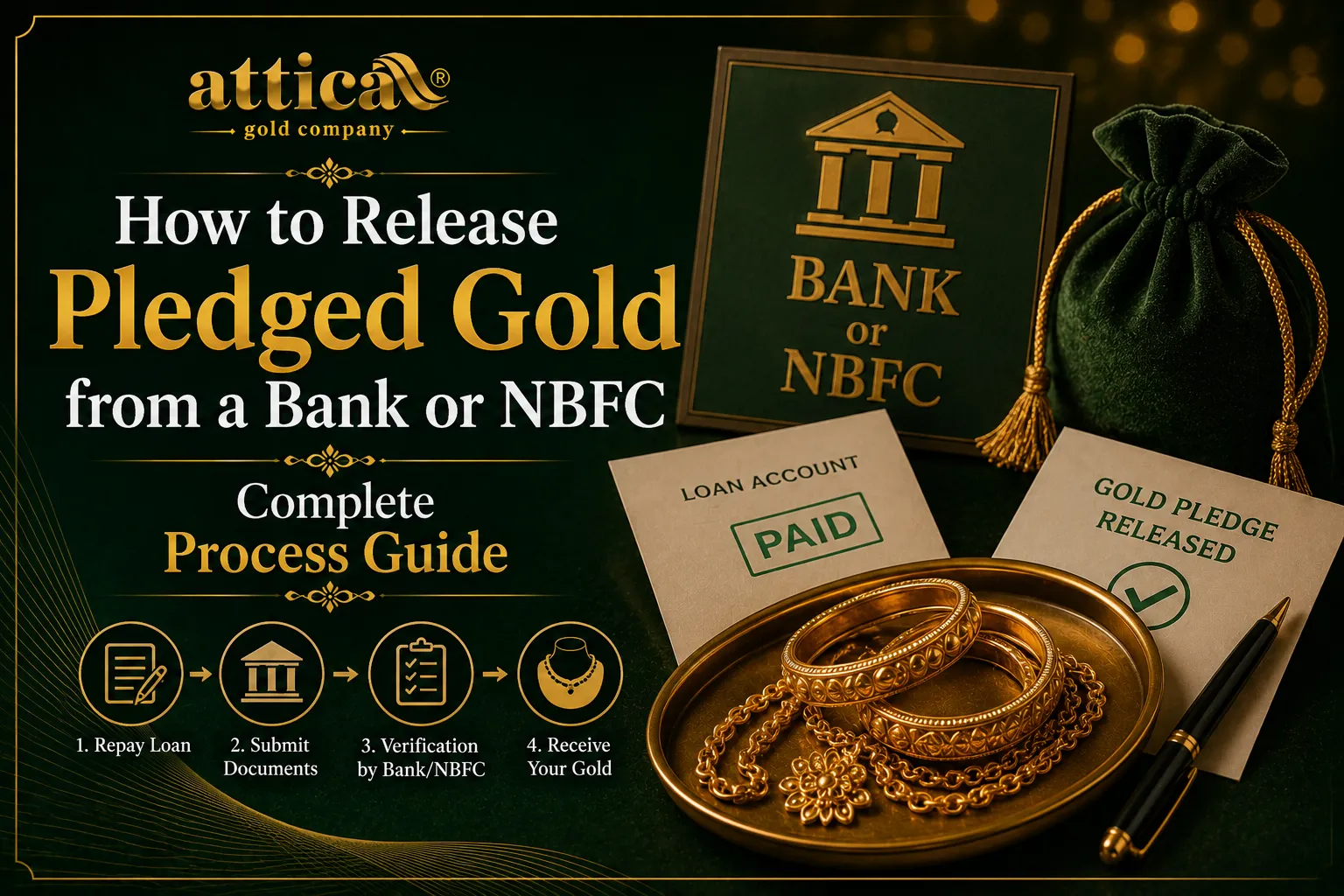
Step-by-Step: How to Release Pledged Gold
- Check your outstanding balance. Visit the lender branch or app to see principal + accrued interest + charges. Many borrowers underestimate this – interest at the prevailing gold loan interest rate compounds monthly.
- Confirm any foreclosure penalty. Most banks waive this on full prepayment; some NBFCs charge 0–2% of outstanding principal.
- Arrange the full settlement amount via UPI, net banking, RTGS, or cash deposit at the branch.
- Make the payment. Get a stamped ‘Loan Closure Receipt’ the same day.
- Collect a No-Dues Certificate (NDC). This proves the loan is fully settled and is legally required before pledged gold release.
- Physically retrieve your gold. The lender will open the locker in your presence, hand over the ornaments, and have you sign a release receipt. Verify weight and pieces against your original pledge inventory.
If everything is in order, the entire release process takes 1–3 working days from full payment to physical hand-over. Larger or older accounts (with stale documentation) can take up to 7 days.
- Also Read: Live Gold Price Today
Documents Required to Release Pledged Gold
- Original loan agreement / pledge receipt (the document you got at loan disbursement).
- Government-issued photo ID (Aadhaar, PAN, voter ID).
- Gold loan account number and customer ID.
- Loan Closure Receipt (issued after full payment).
- Latest address proof if your address has changed since the loan was issued.
If the original pledge receipt has been lost, the lender will issue a duplicate after KYC verification – usually a 1–2 day delay. Don’t panic; this happens routinely.
What Is Pledged Gold and How Does Gold Pledge Work?
Pledged gold refers to gold ornaments you’ve handed over to a lender as collateral for a gold loan. The gold pledge process: you deposit the ornaments at the bank/NBFC, they assess karat purity and weight, lend you up to 75% of market value (the RBI-mandated LTV cap), and store the gold in their vault until the loan is repaid. Throughout this period, the gold is legally yours – but physically with the lender, and only released after full settlement.
Many borrowers don’t realise that pledged gold accrues interest at the gold loan interest rate every day from disbursement to settlement. So a ₹5L loan at 12% p.a. that runs 18 months instead of 12 costs an extra ₹30,000 in interest – money that comes out of your pocket when you finally settle.
Gold Loan Settlement: What If You Cannot Afford Full Repayment?
If your outstanding balance has grown beyond what you can comfortably repay, you have three options for gold loan settlement: (1) negotiate a one-time settlement (OTS) with the lender – banks sometimes accept 80–90% of outstanding to close the case; (2) take a top-up loan from another lender at a lower gold loan interest rate; (3) use a release-pledged-gold service that settles the loan for you in exchange for a portion of your gold’s market value.
Option 3 is often the most practical when the math has gotten away from you. Attica Gold’s release-pledged-gold service works like this: we visit the lender, settle your full outstanding (principal + interest + charges), receive your pledged gold, and pay you the difference between your gold’s market value and the settlement amount – all in cash, UPI, or bank transfer. You walk away debt-free with the residual cash. This is particularly useful for borrowers facing imminent gold loan default risk.
💰 Get the Best Price for Your Gold Today
Instant valuation • Transparent pricing • 100% secure & trusted
Common Mistakes When Releasing Pledged Gold
- Not getting a No-Dues Certificate. Without an NDC, the loan can technically remain on your CIBIL record. Always demand and keep this document.
- Not verifying gold weight on release. The lender records exact weight at pledge; verify the same weight is returned. Discrepancies are rare but document them immediately if found.
- Paying interest separately from principal in cash without receipts. Always pay through traceable methods (UPI, RTGS) and keep all receipts.
- Not checking foreclosure rules. Some NBFCs have minimum-tenure clauses that trigger penalties even on full prepayment.
- Forgetting that the gold loan interest rate compounds – letting the loan run too long can balloon your settlement amount.
How a Gold Loan Calculator Helps Plan Your Release
Before you start the release process, plug your numbers into a gold loan calculator: principal × gold loan interest rate × time elapsed = approximate interest accrued. Add to this any processing fees and foreclosure charges. The total is your real settlement amount. If this number shocks you, you’re not alone – most borrowers underestimate compounded interest by 30–50%. The earlier you release pledged gold, the less the gold loan interest rate eats into your principal.
Why Choose Attica Gold to Help Release Pledged Gold
Releasing pledged gold doesn’t have to mean draining your savings or scrambling for an emergency loan. The right path depends on your specific situation – full self-payment if you have liquidity, OTS negotiation if your balance has ballooned beyond repayable, or a release-service if you simply want the gold back without taking on more debt. The wrong path is letting the loan drift toward auction; once the bank issues a 60-day notice, your options narrow drastically.
Attica Gold’s release-pledged-gold service has helped hundreds of borrowers across South India clear their bank/NBFC loans and reclaim their ornaments without taking on new debt. We settle your full outstanding directly with the lender, retrieve your gold, and pay you the residual cash value. ISO 9001:2015 certified processes, transparent valuations using XRF testing, and 200+ branches across Karnataka, Tamil Nadu, Andhra Pradesh, Telangana, and Pondicherry. If your gold loan has gotten away from you and you’re searching for a way out, your wait is over. Visit your nearest Attica Gold branch today for a free, no-obligation consultation.
Frequently Asked Questions
How long does it take to release pledged gold from a bank?
Once you make full payment, the bank issues a Loan Closure Receipt and No-Dues Certificate the same day, and physical release of your pledged gold typically happens within 1–3 working days. Larger or older accounts can take up to 7 days due to documentation verification.
What is the typical gold loan interest rate I’ll need to pay before release?
Gold loan interest rate ranges from 9–11% p.a. at banks, 11–15% at NBFCs, and 12–18% at cooperative banks (FY26 levels). Your settlement amount = original principal + accrued interest at this rate × loan tenure + any charges. Use the lender’s gold loan calculator or app to check the exact figure.
Can I release pledged gold without paying the full loan?
Generally no – the lender will only release pledged gold after full settlement of principal + interest + charges. Your alternatives are: (1) negotiate a one-time settlement (OTS), (2) refinance with a cheaper gold loan, or (3) use a release-pledged-gold service like Attica Gold that settles the loan for you in exchange for a portion of the gold’s market value.
What documents are required to release pledged gold?
Original loan agreement / pledge receipt, government photo ID (Aadhaar, PAN), gold loan account number, Loan Closure Receipt (after payment), and latest address proof if changed. If the original pledge receipt is lost, the lender issues a duplicate after KYC verification.
What is gold loan settlement and how does it differ from regular release?
Gold loan settlement is a one-time negotiated payment that closes the loan account, often at less than the full outstanding (e.g., 85–90% of dues). Regular release requires full payment of principal + interest. Settlement is for borrowers genuinely unable to pay full; lenders accept it to avoid auction proceedings.
How is gold pledge structured at banks vs NBFCs?
Both structures are similar: deposit gold, get a loan up to 75% LTV, pay interest at the gold loan interest rate, recover gold on full repayment. NBFCs typically offer faster disbursement (same day) and slightly higher LTV; banks offer lower rates but stricter documentation. Both are RBI-regulated for gold pledge security.
What happens to my pledged gold if I default?
On default, the lender issues a 60-day notice followed by a 30-day final notice (per RBI Master Direction), then auctions the gold publicly. Total timeline: ~90 days from default to auction. After auction, you receive any surplus over the recovered amount; if the auction recovers less than dues, the deficit can be a recovery claim.
Can Attica Gold help me release pledged gold from any bank?
Attica’s release-pledged-gold service works with most banks, NBFCs, and cooperative banks across Karnataka, Tamil Nadu, Andhra Pradesh, Telangana, and Pondicherry. We settle your loan directly with the lender, retrieve your gold, and pay you the difference between gold market value and settlement amount in cash, UPI, or bank transfer.
Need help releasing your pledged gold?
Visit your nearest Attica Gold branch – we settle your bank/NBFC loan, retrieve your ornaments, and pay you the residual cash. ISO-certified process, transparent XRF valuation, instant payment.
Sources & References
This page references and is informed by the following authoritative sources. Last verified: May 2026.
[1] Master Direction – Gold Loans (RBI/2014-15/74) – Reserve Bank of India (RBI). https://www.rbi.org.in/
[2] Master Direction – NBFC Auctions of Gold – Reserve Bank of India (RBI). https://www.rbi.org.in/
[3] Daily Gold Reference Rate – India Bullion and Jewellers Association (IBJA). https://ibja.co/
[4] Gold Loan Disclosure Requirements – RBI – Fair Practices Code for NBFCs. https://www.rbi.org.in/
[5] Indian Contract Act 1872 – Pledge Provisions (Sec 172–179) – Government of India. https://www.indiacode.nic.in/