
Understanding 14 Karat Gold and Its Real Value
14 karat gold occupies an unusual place in the Indian gold market. It is widely used internationally – especially in US and European fine jewellery – and increasingly popular for fashion pieces and men’s chains in India, but it is still often dismissed as ‘low purity’ by sellers who do not realise that 14 karat gold is still 58.5% real gold. The standard is fixed by the Bureau of Indian Standards: 14 karat gold contains 58.5% pure gold and 41.5% alloy (copper, silver, zinc, sometimes nickel), marked with the ‘585’ hallmark. That 58.5% real gold has real cash value at today’s live rate, regardless of what an unorganised dealer might tell you about 14 karat gold.
This guide covers everything you need to know about 14 karat gold: today’s live rate, how the 585 hallmark works, the colour variations (yellow, white, rose), the trade-offs versus 18K and 22K, where 14 karat gold is most commonly used in India, and exactly what cash value to expect when selling. By the end, you will know precisely how to value any 14 karat gold piece – and how to spot a buyer who is trying to underprice it.
14 Karat Gold at a Glance
| Attribute | 14K Gold |
| Pure Gold Content (14 carat gold purity) | 58.5% (= 585 / 1000 fineness) |
| Other Metals (alloys) | 41.5% – copper, silver, zinc, nickel |
| BIS Hallmark | 585 (also ’14K’) |
| Common Use | Lightweight chains, fashion jewellery, men’s bracelets, watches |
| Today’s Rate | See live rate widget below |
| Resale Value | 58.5% of today’s 24K rate per gram, less small refining margin |
Today’s Live 14 Carat Gold Rate
The 14 carat gold rate today is calculated as 58.5% of today’s 24K rate per gram. So if 24K trades at ₹6,800/g, the 14 carat gold rate works out to roughly ₹3,978/g. This proportion is constant – it reflects pure gold content, not market mood. The 14k gold rate moves in step with the 22K and 18K rates, driven by international gold spot, the rupee–dollar exchange, and Indian import duty.
Use the widget below to verify the 14 carat gold price today and the 14k gold price across India. The IBJA twice-daily benchmark plus live MCX provides the reference; the 14 carat gold price in india is largely uniform across cities, with only minor handling variations.
What is 14 Karat Gold? Composition and Properties
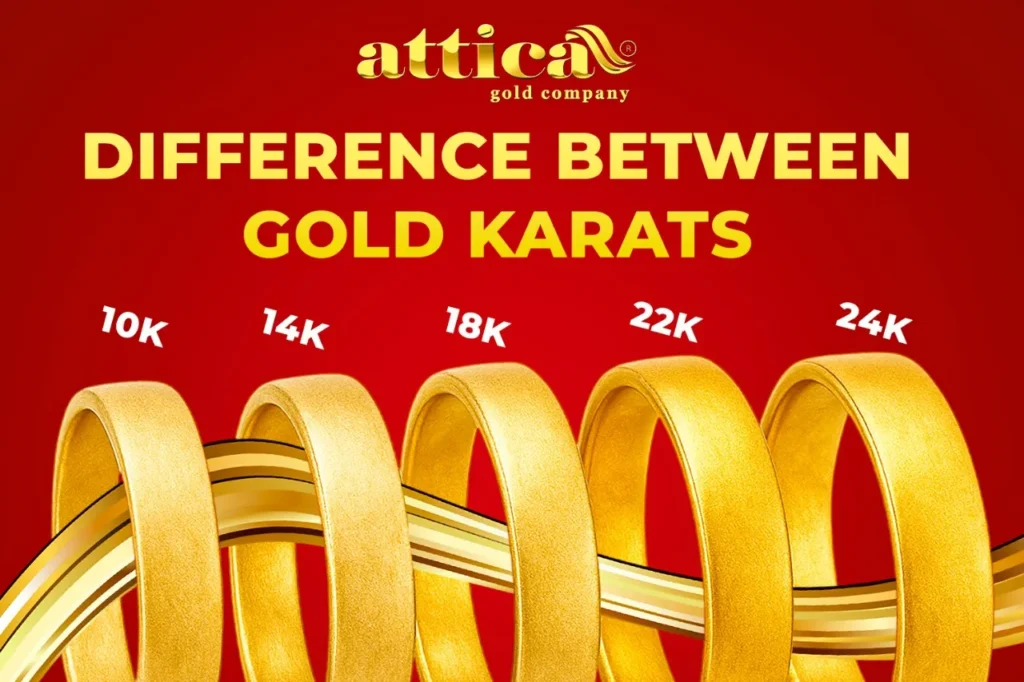
14 karat gold is gold mixed with a higher proportion of other metals than 18K or 22K – about 58.5% pure gold and 41.5% alloy. The high alloy content makes 14k gold the hardest of the popular jewellery purities, which is exactly why it’s widely used internationally for daily-wear pieces. The trade-off: 14 carat gold is less ‘gold yellow’ than 22K, and it has noticeably less resale value per gram because there’s simply less pure gold inside.
Like 18K, 14 carat gold comes in yellow, white, and rose variants depending on the alloy mix. White 14k gold uses palladium or nickel; yellow 14K uses copper and silver; rose 14K uses more copper. All three contain identical 58.5% pure gold – the colour is decorative.
How to Identify 14 Carat Gold: The 585 Hallmark
The Indian BIS hallmark for 14 karat gold is ‘585’ – meaning 585 parts pure gold per 1000, or 58.5% purity. Like 18K and 22K, 14K hallmarking became mandatory for new gold sales in June 2021. A genuine 14K piece carries:
• BIS triangular logo with ‘BIS’ text inside.
• Purity grade – ‘585’ for 14 carat gold (others: 750 for 18K, 916 for 22K, 999 for 24K).
• Six-digit Hallmark Unique ID (HUID) – verifiable on the BIS Care app.
• Jeweller’s ID mark.
Older 14k gold pieces (pre-2021) may not have the HUID. They typically still carry the 585 mark and BIS triangle. To verify any piece – old or new, hallmarked or not – any reputable buyer can run an XRF test that measures actual gold content (~58.5% for genuine 14K) in seconds.
14 Karat Gold vs 18K vs 22K: How to Choose
14 carat gold is the lowest-purity standard widely used for jewellery in India. Each purity has clear strengths:
| Purity | Pure Gold % | Strengths | Considerations |
| 14K (14 carat gold) | 58.5% (585 hallmark) | Hardest, most durable, most affordable | Lowest resale per gram |
| 18K (18 carat gold) | 75% (750 hallmark) | Balance of hardness and value, ideal for diamonds | Common globally; growing in India |
| 22K (22 carat gold) | 91.6% (916 hallmark) | Traditional Indian; high resale | Softer than 18K/14K |
Most Indian buyers default to 22K for traditional jewellery and 18K for diamond-set pieces. 14k gold is the right choice when (1) durability matters more than gold content, (2) the budget is tighter, or (3) the piece is fashion-driven (men’s chains, bracelets, dress watches) where resale value is not a priority.
💰 Get the Best Price for Your Gold Today
Instant valuation • Transparent pricing • 100% secure & trusted
Where 14 Karat Gold Is Commonly Used
14K gold is widely chosen for its balance of durability, affordability, and everyday practicality. Its higher alloy content makes it more resistant to scratches and bending, making it ideal for jewellery that is worn frequently and needs to withstand regular use.
14k gold has clear use cases that suit its harder, more affordable nature:
- Lightweight chains and bracelets: Durability over weight, with lower per-piece cost.
- Men’s jewellery: Kadas, ID bracelets, and dress watches where added hardness matters.
- Fashion and dress jewellery: Pieces designed for occasional wear at more affordable price points.
- International/export pieces: Many US and European fine jewellery designs use 14K, so imported brands often follow this standard.
- Watch cases: Luxury and dress watches crafted in 14K white or yellow gold.
Resale Value: How Much Will You Get for 14 Karat Gold?
The 14 carat gold price in india for resale is direct: 58.5% of today’s 24K rate per gram, multiplied by piece weight, minus fair deductions for stones, solder, or any non-gold elements. So 10g of 14K with ₹6,800/g 24K rate = 10 × 0.585 × ₹6,800 = ₹39,780 gross. Compare that to 10g of 22K = ₹62,288, or 10g of 18K = ₹51,000 – the 14K piece nets approximately 36% less than 22K of the same weight, simply because it contains less pure gold.
Reputable buyers like Attica Gold use XRF purity testing to verify the 58.5% content; if the piece tests slightly higher or lower, the price is adjusted accordingly. The 14k gold price in india for resale is uniform across cities; only the buyer’s margin differs (₹50–₹500/g spread between dedicated buyers, jewellers, and pawn shops).
What to Watch For When Selling 14 Karat Gold
Two issues are specific to 14k gold sellers. First, some unorganised buyers refuse 14K outright or quote artificially low rates because the piece is ‘low purity’ – this is unfair. The 58.5% content is real gold, valued at the same per-pure-gram rate as any other purity. Second, 14 carat gold pieces (especially men’s chains and bracelets) are often heavier than they look, and may have been sold to you with making charges at jewellery shops that priced them as if they were higher purity. Always insist on XRF testing – it removes ambiguity instantly.
If your piece has stones, ask for stones to be removed and returned to you before the gold is weighed. Diamonds and gemstones are best sold separately, since their resale value is typically much lower than retail and varies enormously by quality.
Why Choose Attica Gold to Sell Your 14 Karat Gold
14 karat gold is often dismissed as ‘low purity’ by sellers who don’t realise it’s still 58.5% real gold – and that real gold is valued by reputable buyers at today’s live rate, just like any other purity. The 585 hallmark is your guarantee of authenticity; XRF testing is your guarantee that you’re paid for the actual gold content, not assumed-down. Whether your 14 karat gold piece is a men’s chain, a fashion bracelet, an imported designer piece, or a lightweight chain – it has real cash value at today’s live IBJA rate.
Attica Gold accepts 14 karat gold at every branch across Karnataka, Tamil Nadu, Andhra Pradesh, Telangana and Pondicherry – no minimum purity threshold, no surcharge for ‘low purity’, no pressure to convert into a 22K exchange. The price is calculated transparently: weight × tested purity × today’s IBJA 24K rate − fair deductions for stones and solder. If you’ve been told elsewhere that 14K isn’t worth selling, you’ve been told wrong. Your wait is over – walk into your nearest Attica Gold branch for a free XRF test and a written quote at today’s rate, and see for yourself.
Frequently Asked Questions
What is 14 karat gold and how pure is it?
14 karat gold (also called 14K gold or 14 carat gold) is gold that is 58.5% pure – the rest 41.5% is alloy metals like copper, silver, zinc, and nickel. The 14 carat gold purity is fixed by BIS standards at 58.5% (= 585/1000 fineness), identified by the ‘585’ hallmark stamp.
What is the 14 carat gold rate today in India?
The 14 carat gold rate today is approximately 58.5% of today’s 24K rate per gram. If 24K is at ₹6,800/g, the 14k gold rate works out to roughly ₹3,978/g. The rate moves with international spot, the rupee–dollar rate, and Indian import duty. Use the live widget above for today’s exact 14 carat gold price.
What does the 585 hallmark mean?
The 585 mark is the BIS-certified purity indicator for 14 carat gold – meaning 585 parts pure gold per 1000, or 58.5% purity. It’s one of four BIS jewellery purity grades: 585 (14K), 750 (18K), 916 (22K), 999 (24K).
Is the 14 carat gold price in india the same across cities?
Largely yes. The 14 carat gold price in india is set by IBJA nationally; city-to-city variations are minor (₹10–₹50/g) for local handling. Bigger differences come from buyer-to-buyer margins than from city-to-city changes. Bangalore, Chennai, Hyderabad, Mumbai and Delhi all trade within a narrow band.
Why is 14k gold less common in Indian jewellery?
Indian buyers have traditionally preferred high-purity gold (22K, 916 hallmark) because it doubles as both ornament and investment. 14k gold is more common internationally – especially in US and European fine jewellery. In India, 14K is gaining ground for fashion pieces, men’s jewellery, and budget-conscious purchases, but 22K and 18K still dominate.
Can I sell 14 karat gold without a hallmark?
Yes. Hallmarking only became mandatory for new sales in June 2021, so older 14 carat gold pieces may lack the 585 mark. Reputable buyers test purity using XRF (X-ray fluorescence), measuring actual gold content in seconds – regardless of whether the piece is hallmarked.
How much will I get if I sell my 14 karat gold?
The 14 carat gold price you receive for resale = weight × 58.5% × today’s 24K rate − fair deductions for stones and solder. For 10g of 14K at ₹6,800/g 24K rate, you receive approximately ₹39,780 gross before deductions. Compare this against 10g of 22K (~₹62,288) – same weight, but 14K nets ~36% less because it contains less pure gold.
Is 14k gold a good investment?
14 karat gold is fine for jewellery but not ideal as an investment. Per gram of pure gold, all purities are valued the same – but per gram of total weight, 14K contains the least pure gold. For pure investment, 24K coins or bars are most efficient. 22K is a reasonable balance for those who want to wear it and keep its resale value high. 14K’s strengths are durability and lower entry cost.
{ “@context”: “https://schema.org”, “@type”: “FAQPage”, “mainEntity”: [ { “@type”: “Question”, “name”: “What is 14 karat gold and how pure is it?”, “acceptedAnswer”: { “@type”: “Answer”, “text”: “14 karat gold (also called 14K gold or 14 carat gold) is gold that is 58.5% pure – the rest 41.5% is alloy metals like copper, silver, zinc, and nickel. The 14 carat gold purity is fixed by BIS standards at 58.5% (= 585/1000 fineness), identified by the ‘585’ hallmark stamp.” } }, { “@type”: “Question”, “name”: “What is the 14 carat gold rate today in India?”, “acceptedAnswer”: { “@type”: “Answer”, “text”: “The 14 carat gold rate today is approximately 58.5% of today’s 24K rate per gram. If 24K is at ₹6,800/g, the 14k gold rate works out to roughly ₹3,978/g. The rate moves with international spot, the rupee–dollar rate, and Indian import duty. Use the live widget above for today’s exact 14 carat gold price.” } }, { “@type”: “Question”, “name”: “What does the 585 hallmark mean?”, “acceptedAnswer”: { “@type”: “Answer”, “text”: “The 585 mark is the BIS-certified purity indicator for 14 carat gold – meaning 585 parts pure gold per 1000, or 58.5% purity. It’s one of four BIS jewellery purity grades: 585 (14K), 750 (18K), 916 (22K), 999 (24K).” } }, { “@type”: “Question”, “name”: “Is the 14 carat gold price in india the same across cities?”, “acceptedAnswer”: { “@type”: “Answer”, “text”: “Largely yes. The 14 carat gold price in india is set by IBJA nationally; city-to-city variations are minor (₹10–₹50/g) for local handling. Bigger differences come from buyer-to-buyer margins than from city-to-city changes. Bangalore, Chennai, Hyderabad, Mumbai and Delhi all trade within a narrow band.” } }, { “@type”: “Question”, “name”: “Why is 14k gold less common in Indian jewellery?”, “acceptedAnswer”: { “@type”: “Answer”, “text”: “Indian buyers have traditionally preferred high-purity gold (22K, 916 hallmark) because it doubles as both ornament and investment. 14k gold is more common internationally – especially in US and European fine jewellery. In India, 14K is gaining ground for fashion pieces, men’s jewellery, and budget-conscious purchases, but 22K and 18K still dominate.” } }, { “@type”: “Question”, “name”: “Can I sell 14 karat gold without a hallmark?”, “acceptedAnswer”: { “@type”: “Answer”, “text”: “Yes. Hallmarking only became mandatory for new sales in June 2021, so older 14 carat gold pieces may lack the 585 mark. Reputable buyers test purity using XRF (X-ray fluorescence), measuring actual gold content in seconds – regardless of whether the piece is hallmarked.” } }, { “@type”: “Question”, “name”: “How much will I get if I sell my 14 karat gold?”, “acceptedAnswer”: { “@type”: “Answer”, “text”: “The 14 carat gold price you receive for resale = weight × 58.5% × today’s 24K rate − fair deductions for stones and solder. For 10g of 14K at ₹6,800/g 24K rate, you receive approximately ₹39,780 gross before deductions. Compare this against 10g of 22K (~₹62,288) – same weight, but 14K nets ~36% less because it contains less pure gold.” } }, { “@type”: “Question”, “name”: “Is 14k gold a good investment?”, “acceptedAnswer”: { “@type”: “Answer”, “text”: “14 karat gold is fine for jewellery but not ideal as an investment. Per gram of pure gold, all purities are valued the same – but per gram of total weight, 14K contains the least pure gold. For pure investment, 24K coins or bars are most efficient. 22K is a reasonable balance for those who want to wear it and keep its resale value high. 14K’s strengths are durability and lower entry cost.” } } ] }Want to know exactly what your 14 karat gold is worth today?
Visit your nearest Attica Gold branch for a free XRF purity test and a transparent written quote at today’s live rate.
Get Instant Valuation
Free evaluation · No obligation · Instant offer
🔒 Your details are safe and confidential