
Why Gold Price Charts Matter When You’re Selling
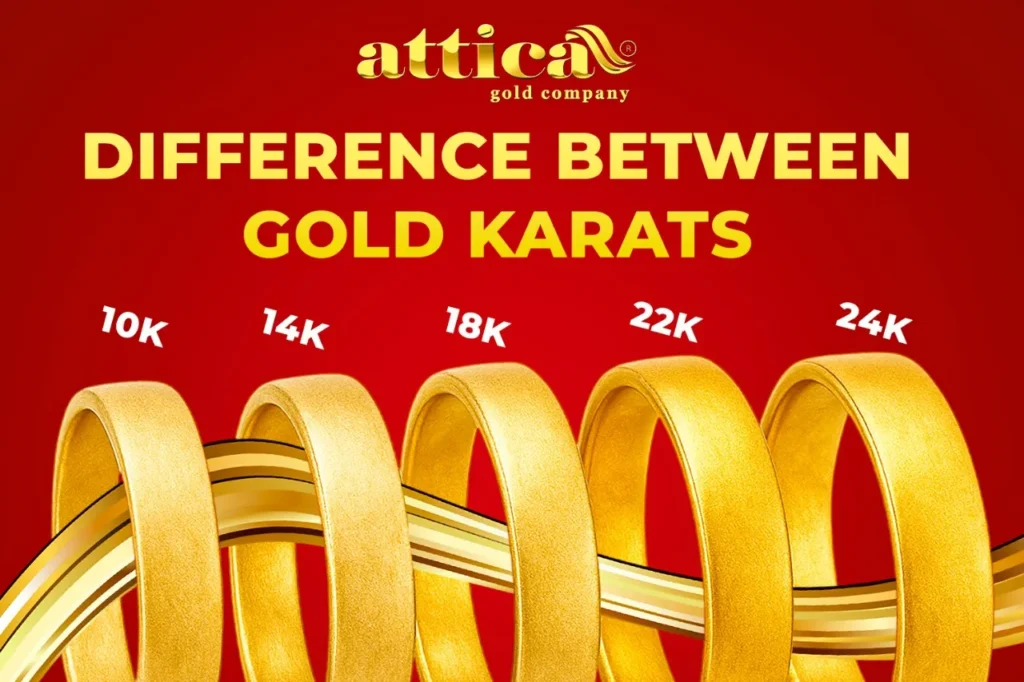
If you are about to sell gold, the single most useful tool you can have on your phone is a live gold price chart. The chart tells you three things at once: where the rate stands right now, how it has moved over the past day/week/month, and how today’s rate compares to historical highs and lows. A good chart helps you avoid two common mistakes – selling on a sharp dip, thinking ‘rates have crashed’ when they’ve actually only pulled back from an all-time high, or holding out endlessly waiting for a higher peak that may not materialise. Today’s reference rate at the time of writing: 24K = ₹15,250/g, 22K = ₹13,965/g, 18K = ₹11,438/g, 14K = ₹8,921/g.
This guide explains every gold price chart you will encounter in India: the IBJA twice-daily reference, MCX intraday futures, international London/COMEX spot, and the long-term decade-by-decade view. By the end, you will know which chart to look at for which decision, how to interpret the patterns, and how to decide if today is a good day to sell or wait.
Gold Price Chart at a Glance
| Chart Type | What It Shows | Best For |
| IBJA Live Rate | Twice-daily reference rate (12:30 PM & 4:30 PM IST) | Today’s selling decision |
| MCX Gold Futures | Intraday minute-by-minute price moves | Timing within the day |
| Daily Closing Chart | Last 30 days of closing prices | Short-term trend assessment |
| Monthly Chart | Last 12 months of monthly averages | Medium-term trend |
| 5-Year Chart | Multi-year cycle view | Long-term holding decision |
| 10-Year Chart | Decade-long secular trend | Inheritance/legacy decisions |
Today’s Live Gold Price (IBJA Reference)
The India Bullion and Jewellers Association (IBJA) publishes the official daily benchmark rate for 24K, 22K, 18K and 14K gold twice every working day – at 12:30 PM and 4:30 PM IST. This rate is published on ibjarates.com and is what every reputable Indian gold buyer (including Attica Gold) references when applying today’s rate to your sale. Between IBJA refreshes, the live rate adjusts based on MCX intraday moves, but most buyers cap their adjustments at the next IBJA reset to avoid mispricing.
| 🔧 LIVE RATE WIDGET PLACEHOLDER Embed live IBJA rate widget showing 24K, 22K, 18K, 14K per-gram rate with last-updated timestamp from IBJA. Include the MCX intraday chart visualisation. Disclaimer: ‘Indicative rate; final price depends on actual purity test at branch.’ |
MCX Gold Futures Chart – How to Read Intraday Moves
MCX (Multi Commodity Exchange) lists gold futures contracts that trade from 9:00 AM to 11:30 PM IST on weekdays – meaning gold prices move in India during a much longer window than IBJA’s twice-daily reference. The MCX chart shows minute-by-minute price moves driven by international news, dollar movements, and geopolitical events. For sellers, MCX matters when international markets move sharply mid-day – for example, a sharp dollar weakening overnight typically pushes gold higher in MCX, and reputable buyers may apply an interim higher rate before the next IBJA reset. Conversely, a sharp gold sell-off in COMEX/London overnight may push MCX lower at market open.
💰 Get the Best Price for Your Gold Today
Instant valuation • Transparent pricing • 100% secure & trusted
Daily and Monthly Closing Charts – Trend Reading
The 30-day closing chart shows you whether you are selling into a rally, a pullback, or a sideways consolidation. Three common patterns:
● Steady uptrend (higher highs and higher lows over 30 days) – selling here means you’re getting near-term peak value, but waiting could yield more if the trend continues.
● Sharp pullback from recent high (price dropped 3-5% in last week from the month’s peak) – selling here means you’re ‘losing’ the near-term peak; consider waiting if you don’t need urgent cash.
● Sideways consolidation (price moving in a tight range for weeks) – neither buying nor selling pressure dominates; selling now is fine if you have a use for the cash.
The 12-month chart shows seasonal patterns – Indian gold demand peaks during Akshaya Tritiya (April-May), Dhanteras-Diwali (October-November), and the wedding season (October-February). Prices often firm up in these windows due to physical demand, though international macro factors can override seasonal trends in any given year.
5-Year and 10-Year Historical Charts – The Long View
The 5-year and 10-year charts tell a different story from https://www.atticagoldcompany.com/ the daily charts. Over the last decade, Indian gold prices have moved from roughly ₹2,500/g in 2015 to over ₹15,000/g in 2026 – a six-fold increase. Two factors drove this: (1) international gold rising from ~$1,100/oz in 2015 to ~$2,800+/oz in 2026, and (2) the rupee depreciating from ~₹65/USD in 2015 to ~₹85+/USD in 2026. For sellers, this long view matters because it shows that gold has historically held value against inflation and currency depreciation – but also that holding for 10+ years has been more rewarding than short-term trading.
How to Use Charts for Your Selling Decision
Charts are inputs, not commands. The right selling decision combines three factors: (1) what the chart shows about today’s rate vs the 30-day, 90-day and 1-year range; (2) whether you have an immediate cash need (medical, education, debt clearance) that overrides timing; and (3) what your alternatives are (gold loan, partial sale, holding longer).
If you have urgent cash needs, sell at today’s rate – the IBJA reference is honest, and waiting for a better rate when you need cash now is rarely worth the holding cost (forgone use of money, market risk). If you have flexibility on timing, monitor the 30-day chart for 1–2 weeks; sell on a green day where the rate is at or above the 30-day average. Avoid emotional decisions based on a single day’s move.
What to Watch For When a Buyer Quotes You a Rate
● The buyer should reference IBJA – and ideally show you the IBJA chart on their screen at the point of sale.
● MCX intraday adjustments should be visible – if a buyer says ‘rate moved’ but doesn’t show you the chart, that’s a red flag.
● Rates should be uniform city-to-city – IBJA is a national benchmark; rates in Bangalore, Chennai, Hyderabad and Pondicherry should be within ₹10–15/g of each other.
● Refining margin should be transparent – typically 1–2% of gross, separately itemised on your receipt.
● Avoid buyers who quote a ‘flat rate’ without IBJA reference – that’s often 5–10% below IBJA in disguise.
Why Choose Attica Gold for Your Sale
Attica Gold Company has been buying gold from Indian sellers for over a decade through 200+ branches across Karnataka, Tamil Nadu, Andhra Pradesh, Telangana and Pondicherry – and we are India’s first ISO 9001:2015 certified cash-for-gold buyer. Every transaction at Attica is built around three principles: transparent weighing on calibrated electronic scales (visible to you), in-front-of-you XRF purity testing (no back-room work), and rates benchmarked to the live IBJA reference (no hidden refining margins).
When you walk into Attica with your gold, the entire process – weight verification, XRF purity test, today’s rate application, deduction explanation (if any) and final payment – takes under 30 minutes for most pieces. We pay cash up to ₹2,00,000 (the legal limit under Section 269ST) and the balance via instant bank transfer or RTGS for higher-value sales. No deferred payments, no ‘come back tomorrow’, no pressure tactics. Your wait is over.
KEYWORD COVERAGE TABLE – FOR EDITORIAL VERIFICATION
| Keyword | Role | Volume (MSV) | Where Covered |
| gold price chart | Primary | 165,000 | H1, intro, body, FAQ, meta |
| gold rate chart | Secondary | 33,000 | Body, headers |
| gold price graph india | Secondary | 8,100 | Body |
| gold rate trend | Secondary | 4,400 | Body |
| gold price chart india | Secondary | 2,400 | Body |
| gold rate movement | Secondary | 880 | Body |
Frequently Asked Questions
What is today’s gold price in India?
Today’s reference rate (per gram): 24K = ₹15,250, 22K = ₹13,965, 18K = ₹11,438, 14K = ₹8,921. The live rate widget on this page shows the current rate that updates twice daily through IBJA at 12:30 PM and 4:30 PM IST
Where can I see a reliable gold price chart?
The most authoritative source is IBJA at ibjarates.com (twice-daily reference rate). For intraday moves, MCX gold futures show minute-by-minute prices. Reputable buyers display both on their websites and apply IBJA at the point of sale.
How often does the gold price change in India?
IBJA reference rate updates twice daily – at 12:30 PM and 4:30 PM IST on working days. MCX intraday prices change every minute during market hours (9:00 AM to 11:30 PM IST). Buyers like Attica typically apply the latest IBJA reset, with intraday adjustments only for sharp moves.
Why is the gold price different in different cities?
Mostly it isn’t. The IBJA rate is a national benchmark. Differences between Bangalore, Chennai, Hyderabad and Pondicherry are typically under ₹10–15/g and reflect minor local handling costs. If you see rate differences of more than 1% between cities for the same purity, it’s likely a buyer-specific margin difference, not a city-rate difference.
Should I wait for a higher gold price before selling?
Depends on your situation. If you have urgent cash needs, sell now. If you have flexibility, monitor the 30-day chart and sell when the rate is at or above the 30-day moving average. Avoid trying to time the absolute peak – most sellers who wait for ‘just a little higher’ end up selling at a worse price after a pullback.
What’s the difference between IBJA, MCX and the international gold price?
IBJA is the daily reference for Indian retail buyers (twice-daily reset). MCX is the futures market (intraday, minute-by-minute). International gold (London/COMEX) is the global benchmark in USD/oz, which translates to Indian prices via the rupee-dollar rate plus 6% import duty plus 3% GST. All three are linked but diverge slightly intraday
Does the gold price include GST?
GST (3% on gold value + 5% on making charges) applies when you buy gold from a jeweller. When you sell gold to a buyer like Attica, GST does not apply to your sale – you receive the gross gold value minus the buyer’s refining margin, period
Get Instant Valuation
Free evaluation · No obligation · Instant offer
🔒 Your details are safe and confidential