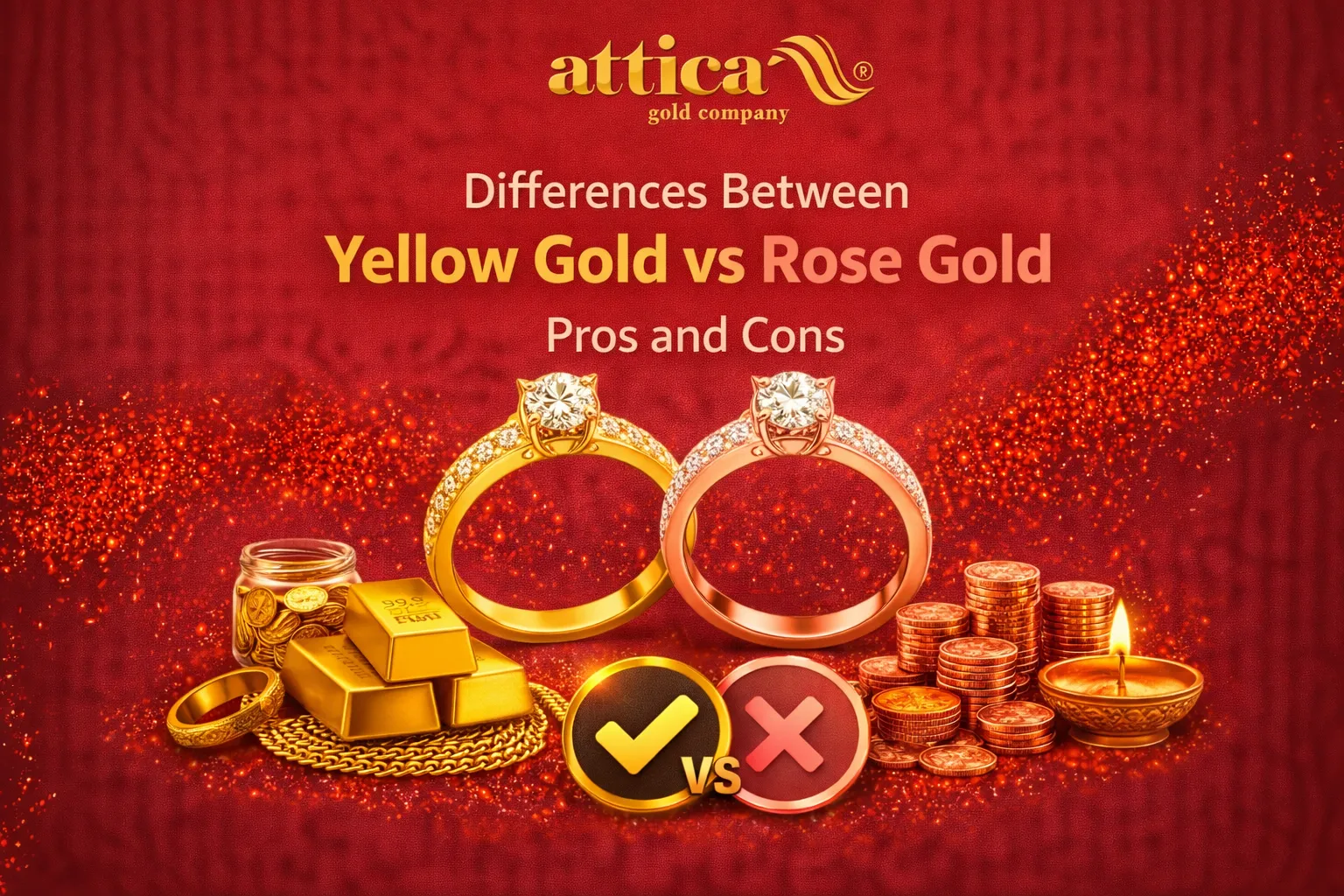
Differences Between Yellow Gold vs Rose Gold: Pros and Cons
Gold jewellery continues to evolve in style, colour, and design, offering buyers more personalised choices than ever before. One of the most common comparisons today is the differences Between Yellow Gold vs Rose Gold, especially among buyers choosing engagement rings, wedding jewellery, or everyday accessories.
- Also Read: Live Gold Price Today
While both yellow gold and rose gold contain real gold and hold similar intrinsic value, they differ in colour, composition, durability, styling appeal, and suitability for various jewellery uses. Some buyers prefer the timeless elegance of yellow gold, while others are drawn to the romantic and modern appeal of rose gold.
Understanding the Differences Between Yellow Gold and Rose Gold helps you make an informed purchase decision based on personal style, maintenance preference, and long-term wearability.
This guide explores the Difference Between Yellow Gold and Rose Gold, their characteristics, advantages, disadvantages, and which option best suits your jewellery needs.
Understanding Yellow Gold and Rose Gold
Both yellow gold and rose gold jewellery are created by alloying pure gold with other metals. Pure gold in its natural form is very soft and unsuitable for jewellery worn daily. Therefore, jewellers mix gold with alloy metals to increase strength and durability.
The type and proportion of alloy metals determine the final colour of jewellery.
Yellow gold maintains its natural golden colour by mixing gold with metals like copper and silver. Rose gold, on the other hand, is created by combining gold with a higher proportion of copper, which gives it a distinctive pinkish or reddish tone.
Although the colour varies, both types contain genuine gold and are valued based on karat purity and weight.
What Is Yellow Gold?
Yellow gold is the most traditional form of gold jewellery and has been used for thousands of years across cultures. It closely resembles the natural colour of pure gold while being strengthened with alloy metals.
Yellow gold jewellery is widely used in bridal collections, heritage ornaments, religious jewellery, and daily wear pieces because of its timeless appeal and cultural significance.
Composition of Yellow Gold
Yellow gold jewellery typically consists of:
- Pure Gold as the Main Metal: Forms the primary component, providing intrinsic value while alloy metals strengthen jewellery for practical long-term wear.
- Copper to Increase Strength: Copper is added to improve durability and resistance to bending while preserving traditional warm gold colour in jewellery.
- Silver to Maintain Colour Balance: Silver helps stabilise colour tone and enhances workability, allowing jewellers to craft intricate jewellery designs more easily.
- Alloy Ratios Based on Purity Levels: Proportions differ depending on karat values such as 22K, 18K, or 14K, influencing colour, strength, and durability.
Higher karat jewellery contains more pure gold, making it softer while offering higher intrinsic value for investment and resale purposes.
Key Characteristics of Yellow Gold
Yellow gold jewellery offers several distinctive characteristics:
- Warm and Rich Golden Tone: Retains natural gold colour that symbolises tradition, prosperity, and timeless elegance across jewellery cultures worldwide.
- Classic and Timeless Appearance: Maintains long-standing appeal that remains fashionable across generations, suitable for heritage jewellery and ceremonial wear.
- Stable Colour That Does Not Fade: Colour remains consistent over time without peeling or wearing off, unlike plated metals.
- Easy Polishing and Repair: Jewellers can easily polish, resize, or repair yellow gold jewellery without complex restoration processes.
- Suitable for Traditional and Modern Designs: Yellow gold adapts well to both heavy ceremonial jewellery and contemporary minimalist jewellery collections.
These qualities make yellow gold especially popular for jewellery intended to become family heirlooms.
- Also Read: gold loan interest rates
Pros of Yellow Gold
Yellow gold offers multiple benefits:
- Retains Natural Gold Colour Without Plating: Jewellery colour remains permanent, eliminating need for surface coatings or future colour restoration maintenance.
- Requires Minimal Maintenance: Routine cleaning and occasional polishing are sufficient to maintain shine and appearance for long-term jewellery ownership.
- Generally Hypoallergenic and Skin-Friendly: Lower presence of reactive metals makes yellow gold safer for sensitive skin during prolonged jewellery wear.
- Ideal for Traditional and Bridal Jewellery: Remains preferred choice for weddings, festivals, and ceremonial jewellery across multiple cultures globally.
- Easy Resizing and Repair: Yellow gold’s malleability allows jewellers to resize rings and repair jewellery without damaging structural integrity.
- Strong Resale and Heirloom Value: Familiarity in gold markets ensures easier resale and preservation of family jewellery across generations.
Because of its simplicity and durability, yellow gold remains a reliable choice for everyday jewellery use.
Cons of Yellow Gold
Despite its strengths, yellow gold also has some limitations:
- Softer in Higher Karats: Jewellery containing higher gold purity scratches more easily due to reduced alloy strength compared to lower karat metals.
- More Prone to Scratches Compared to Rose Gold: Softer structure allows surface marks to appear sooner in frequently worn jewellery pieces.
- May Appear Too Traditional for Modern Fashion Lovers: Younger buyers sometimes prefer contemporary jewellery colours that feel more trendy and unique.
- Less Trendy Among Younger Buyers: Fashion-forward consumers may lean toward rose or white gold for modern aesthetics instead of traditional gold tones.
However, scratches on yellow gold are usually cosmetic and can be polished away easily.
What Is Rose Gold?
Rose gold is a modern gold alloy known for its soft pink or reddish appearance. It has gained immense popularity in recent years for engagement rings and designer jewellery collections.
Rose gold is produced by mixing pure gold with a higher percentage of copper, which gives the jewellery its signature warm blush tone. Small amounts of silver may also be added to balance colour and workability.
Rose gold is widely used in modern jewellery designs due to its romantic and stylish look.
Composition of Rose Gold
Rose gold jewellery typically contains:
- Pure Gold as the Base Metal: Provides intrinsic value while alloy metals enhance durability and achieve the distinctive pink colour tone.
- High Copper Content for Pink Colour: Copper alloy produces the characteristic rose tone and strengthens jewellery structure for everyday wear durability.
- Small Quantities of Silver for Alloy Balance: Silver balances alloy composition, ensuring jewellery remains workable and visually consistent during manufacturing.
- Alloy Ratios Differ by Karat and Manufacturer: Colour depth and strength vary depending on purity level and jeweller alloy formulas used.
The copper component significantly increases durability compared to traditional yellow gold jewellery.
Key Characteristics of Rose Gold
Rose gold jewellery features unique characteristics:
- Warm Pink or Reddish Hue: Distinctive romantic colour differentiates rose gold from traditional jewellery, appealing to modern fashion preferences.
- Modern and Fashionable Appearance: Contemporary jewellery designs frequently use rose gold to create stylish and youthful collections.
- Stronger Due to Copper Alloy: Higher copper content improves scratch resistance and durability compared to higher purity yellow gold jewellery.
- Suitable for Contemporary Jewellery Styles: Popular for engagement rings, minimalist jewellery, and modern accessory collections.
- Durable for Everyday Wear: Increased strength makes rose gold practical for rings, bracelets, and frequently worn jewellery pieces.
Its romantic tone makes rose gold particularly attractive to younger buyers seeking modern jewellery.
Pros of Rose Gold
Rose gold offers several advantages:
- Unique and Trendy Colour: Pinkish tone provides fresh alternative to traditional gold, appealing to buyers seeking distinctive jewellery.
- Stronger and More Scratch-Resistant: Copper alloy enhances durability, making jewellery better suited for daily wear and active lifestyles.
- Ideal for Modern Jewellery Designs: Frequently used in contemporary collections and engagement ring settings.
- Complements Various Skin Tones: Warm blush tone enhances jewellery appearance across multiple skin complexions attractively.
- Suitable for Daily Wear Jewellery: Strength and scratch resistance make rose gold ideal for rings and bracelets worn regularly.
- Popular Choice for Engagement Rings: Romantic colour appeals strongly in engagement jewellery designs globally.
Its durability makes rose gold practical for jewellery worn frequently without excessive maintenance concerns.
Cons of Rose Gold
Rose gold also has certain drawbacks:
- Less Traditional Appeal in Some Cultures: Some buyers prefer classic yellow gold for ceremonial and heritage jewellery purchases.
- Copper Content May Cause Skin Sensitivity: Rare skin reactions may occur among individuals sensitive to copper alloys.
- Fewer Classic Bridal Designs Available: Traditional bridal jewellery collections more commonly feature yellow gold instead of rose gold.
- Colour Preference May Vary Across Generations: Older buyers sometimes prefer conventional jewellery colours over modern rose gold tones.
Despite these concerns, rose gold continues growing in popularity across global jewellery markets.
- Must Know: Best Day to Buy Gold Jewellery in India
Top 10 Differences Between Yellow Gold and Rose Gold (Detailed Comparison)
Understanding the Differences Between Yellow Gold vs Rose Gold becomes easier when we examine practical aspects that influence everyday jewellery usage, maintenance, styling, and long-term satisfaction. While both metals contain real gold, their differences affect comfort, fashion compatibility, durability, and buying decisions.
Below is a detailed explanation of the Top 10 Differences Between Yellow Gold and Rose Gold, helping buyers choose jewellery that aligns with personal style and lifestyle needs.
Colour and Appearance
The most noticeable difference between yellow gold and rose gold is their colour tone and visual appeal. Yellow gold retains the natural warm golden shade traditionally associated with wealth, heritage, and ceremonial jewellery. It reflects classic elegance and is commonly seen in bridal and family ornaments.
Rose gold, however, offers a pinkish or reddish tone created by copper alloy mixing. This blush colour adds a romantic and modern look, making jewellery appear stylish and contemporary. Many buyers prefer rose gold because it feels softer, unique, and fashionable compared to traditional yellow gold.
Yellow gold suits ethnic wear and traditional outfits, whereas rose gold blends beautifully with western attire and modern fashion styling. Buyers often choose based on wardrobe compatibility and personal taste.
Alloy Composition
The difference between yellow gold and rose gold originates mainly from the alloy metals used during manufacturing. Yellow gold jewellery is created by combining pure gold with metals like copper and silver to preserve the golden tone while improving strength.
Rose gold contains a higher percentage of copper alloy, which produces its signature pink colour and increases hardness. Silver may also be added in smaller proportions to balance colour and maintain metal workability.
Because alloy metals influence colour, durability, and skin reaction, understanding composition helps buyers choose jewellery suitable for long-term wear.
Manufacturing Process
Yellow gold jewellery retains its colour naturally and does not require additional surface treatments or plating. Once alloy metals are blended with gold, the jewellery is crafted and polished without needing extra finishing for colour enhancement.
Rose gold also maintains colour naturally due to copper alloy presence, eliminating the need for external coatings. Unlike white gold, which requires rhodium plating, both yellow and rose gold achieve final colour directly from alloy composition.
This makes both metals simpler in long-term maintenance compared to plated jewellery.
Maintenance Requirements
Yellow gold jewellery requires minimal maintenance because its colour remains stable and does not wear off. Regular cleaning and occasional polishing are sufficient to restore shine.
Rose gold jewellery also requires low maintenance, though copper alloy may slightly darken or develop a vintage patina over time due to oxidation. However, professional polishing easily restores original shine.
Both metals remain low-maintenance choices, but rose gold may need occasional polishing more often in humid or polluted environments.
Durability and Scratch Resistance
Rose gold is generally more durable than yellow gold because copper alloy increases strength and hardness. This makes rose gold jewellery more resistant to scratches and bending, especially useful for rings and bracelets worn daily.
Yellow gold, particularly in higher karat forms like 22K, remains softer because it contains more pure gold and fewer strengthening metals. As a result, it scratches more easily, though scratches are usually superficial and can be polished.
Buyers seeking durability for everyday wear often prefer rose gold jewellery.
Skin Sensitivity and Comfort
Yellow gold is widely considered hypoallergenic since it contains minimal reactive metals. It is generally safe for people with sensitive skin and suitable for continuous wear.
Rose gold contains higher copper content, which may cause mild skin irritation or discoloration for some individuals with copper sensitivity. However, this reaction is rare and usually mild.
People with known metal allergies should confirm alloy composition before purchase to ensure comfortable long-term jewellery wear.
Suitability for Gemstone Settings
Yellow gold provides warm contrast that enhances coloured gemstones like rubies, emeralds, and sapphires. It is widely used in traditional gemstone jewellery because the warm gold tone complements rich stone colours.
Rose gold creates a soft romantic setting for gemstones, particularly pastel or vintage-inspired jewellery designs. However, some buyers feel rose gold slightly reduces diamond brightness compared to white metals.
Gemstone selection often influences whether yellow or rose gold becomes the better design choice.
Cultural and Traditional Significance
Yellow gold holds strong cultural and ceremonial importance, especially in Indian, Middle Eastern, and Asian traditions. It is deeply associated with weddings, festivals, inheritance, and wealth preservation.
Rose gold, by contrast, is more fashion-driven and modern. It is commonly chosen for engagement rings, casual jewellery, and contemporary designer collections rather than traditional ceremonies.
Families purchasing heirloom jewellery often prefer yellow gold, while younger buyers lean toward rose gold fashion styles.
Resale and Investment Value
From an investment standpoint, both yellow and rose gold hold equal intrinsic value when purity and weight remain the same. Gold buyers evaluate resale value based on gold content rather than colour.
However, yellow gold jewellery is sometimes easier to resell in traditional markets because buyers are more familiar with it. Rose gold jewellery resale remains similar in value but may appeal more to modern buyers.
Ultimately, resale price depends on purity verification and current gold market rates.
Long-Term Cost Considerations
When comparing long-term ownership costs, yellow gold and rose gold remain fairly similar because neither requires plating or costly surface treatments.
Maintenance expenses are usually limited to occasional polishing or resizing. Rose gold jewellery may require slightly more polishing if oxidation dulls the colour over time, but costs remain minimal.
Overall, both metals provide cost-effective ownership compared to white gold, which requires periodic rhodium re-plating.
White Gold vs Yellow Gold: Detailed Comparison Table
Choosing between white gold and yellow gold becomes easier when you compare how each metal performs in daily use, maintenance needs, styling flexibility, and long-term ownership value.
The table below is to help buyers quickly understand which option better suits their lifestyle, fashion preference, comfort, and resale expectations before making a jewellery purchase decision.
| Factor | White Gold | Yellow Gold |
| Colour & Appearance | Bright silvery-white tone offering modern, sleek, contemporary jewellery styling appeal with reflective surface finish. | Warm natural golden tone offering classic, timeless jewellery styling suited for traditional and cultural preferences. |
| Alloy Composition | Gold mixed with palladium, nickel, or zinc alloys to neutralise yellow tone and improve structural strength. | Gold mixed with copper and silver alloys to retain natural colour while improving durability and metal strength. |
| Manufacturing Process | Jewellery requires rhodium plating after crafting to achieve bright white finish and enhanced surface durability for wear. | Jewellery retains natural colour after crafting and polishing without requiring additional plating or surface finishing treatments. |
| Maintenance Needs | Requires periodic rhodium re-plating to restore whiteness as surface coating gradually wears off with daily jewellery usage. | Requires occasional polishing and cleaning only, since colour remains stable without fading or peeling over extended jewellery wear. |
| Durability | Stronger and more scratch-resistant in lower karat jewellery due to alloy metals increasing overall structural hardness for daily wear. | Softer in higher karat jewellery since higher gold content reduces hardness, making surface scratches slightly more common over time. |
| Skin Sensitivity | Nickel-based alloys may cause irritation for sensitive skin, though nickel-free versions are available for allergy-conscious jewellery buyers. | Naturally hypoallergenic due to fewer reactive alloy metals, making jewellery comfortable for long-term continuous skin contact and wear. |
| Gemstone Compatibility | Neutral white tone enhances diamond brilliance, reflecting light better and making gemstones appear brighter and visually more sparkling overall. | Warm tone offers elegant contrast for coloured gemstones, enhancing richness of stones like rubies, emeralds, and sapphires beautifully. |
| Cultural Significance | Popular in modern, Western-inspired jewellery styles and contemporary fashion-driven engagement and wedding ring preferences globally today. | Strongly associated with traditional weddings, festivals, inheritance jewellery, and culturally significant ornaments across generations and communities worldwide. |
| Resale Value | Resale determined by gold purity and weight only, since rhodium plating cost is not considered during jewellery valuation. | Straightforward resale assessment based on gold weight and purity, making valuation simpler in traditional gold resale markets globally. |
| Long-Term Cost | Higher ownership cost over time due to repeated rhodium re-plating required to maintain original bright white jewellery appearance. | Lower long-term maintenance expense since jewellery rarely requires treatments beyond routine cleaning and occasional professional polishing services. |
- You May Also Like: Difference Between Gold Karats: 24K vs 22K vs 18K vs 14K vs 10K Explained
Which Is Best for You: Yellow Gold vs Rose Gold?
Choosing between yellow gold and rose gold depends on personal style, lifestyle needs, and the purpose behind your jewellery purchase. Both metals offer beauty and long-term value, but their appearance, durability, and cultural associations suit different buyers.
Understanding when each option works best helps you invest confidently in jewellery that fits your fashion preferences and everyday usage needs.
When to Choose Yellow Gold?
- Traditional Jewellery Preference: Buyers who value cultural heritage and classic jewellery designs often prefer yellow gold for weddings, festivals, and family heirloom collections worldwide.
- Low Maintenance Requirement: Yellow gold jewellery retains colour naturally and requires minimal upkeep, making it ideal for buyers seeking long-term convenience without frequent servicing.
- Sensitive Skin Compatibility: Yellow gold typically causes fewer allergic reactions since alloy metals used are gentler on skin, ensuring comfortable long-term jewellery wear daily.
- Bridal and Ceremonial Use: Yellow gold remains the preferred choice for bridal jewellery because it symbolises prosperity, tradition, and emotional value during major life celebrations.
- Strong Resale Familiarity: Yellow gold jewellery enjoys easier resale in traditional markets where buyers prefer standard gold colours for valuation and investment security.
When to Choose Rose Gold?
- Modern Fashion Preference: Buyers seeking trendy and contemporary jewellery often choose rose gold because its soft pink tone complements modern fashion and minimalist accessories.
- Better Durability for Daily Wear: Rose gold contains higher copper content, making jewellery stronger and more resistant to scratches during everyday use activities.
- Unique and Romantic Colour Appeal: Rose gold’s warm blush tone offers a distinctive romantic appearance, ideal for engagement rings and stylish designer jewellery collections.
- Versatility Across Skin Tones: Rose gold flatters many skin tones due to its balanced warm hue, enhancing jewellery appearance without overpowering natural complexion.
- Contemporary Jewellery Collections: Rose gold suits modern jewellery collections where buyers prefer lightweight, fashionable designs instead of heavy traditional ornaments for regular wear.
Both yellow gold and rose gold offer excellent jewellery choices depending on your lifestyle, cultural preferences, and fashion taste. Yellow gold remains timeless and deeply traditional, while rose gold provides modern elegance and improved durability.
Final Perspective on the Differences
Understanding the Differences Between Yellow Gold vs Rose Gold helps buyers choose jewellery that matches lifestyle, fashion preferences, and maintenance expectations. Yellow gold remains timeless, traditional, and culturally significant, while rose gold offers modern style, romantic colour, and improved durability. Many buyers now mix both metals within their jewellery collections to enjoy versatility across occasions and fashion choices.
Buy or Sell Your Gold with Attica Gold Company
If you own yellow gold or rose gold jewellery and are planning to sell, upgrade, or reinvest in new jewellery, choosing a trusted gold buyer is essential. Attica Gold Company, India’s most trusted gold buyer, offers a transparent, reliable, and customer-first gold buying experience across India.
With advanced purity testing technology, real-time gold rate pricing, and instant payment options, Attica ensures customers receive maximum value for their gold. Whether you want to sell old jewellery, broken ornaments, unused gold items, or inherited pieces, the process remains simple, safe, and hassle-free.
Attica Gold Company follows transparent evaluation methods where customers can witness gold testing in front of them, ensuring trust and accuracy in valuation. Immediate payment options and professional service make selling gold convenient for customers nationwide.
When you choose Attica Gold Company, you benefit from:
- Accurate purity testing using advanced technology
- Real-time gold pricing linked to market rates
- Transparent evaluation process in front of customers
- Instant payment through cash or bank transfer options
- Safe and legally compliant gold buying procedures
- Multiple branches across India for easy accessibility
Whether your jewellery is traditional yellow gold or modern rose gold, Attica Gold Company helps you unlock the highest value safely and confidently. Contact Attica Gold Company and visit your nearest branch today.
FAQs
Which is better for daily wear, yellow gold or rose gold?
Both yellow gold and rose gold are suitable for daily wear jewellery, but durability differs slightly. Rose gold is generally stronger due to higher copper content, making it more resistant to scratches during everyday activities. Yellow gold, especially in higher karats, is softer but easier to polish and maintain. Buyers who prefer traditional jewellery may choose yellow gold, while those seeking modern style with added durability often prefer rose gold for daily jewellery use.
Does rose gold contain real gold like yellow gold?
Yes, rose gold contains real gold just like yellow gold. The difference lies in alloy composition rather than gold purity. Rose gold is created by mixing pure gold with copper and sometimes silver, producing its pinkish tone. Both yellow gold and rose gold are valued based on karat purity and weight. Therefore, rose gold jewellery holds genuine intrinsic gold value, making it equally suitable for investment, resale, and long-term jewellery ownership purposes.
Which gold type is better for people with sensitive skin?
Yellow gold is usually better for people with sensitive skin because it contains fewer reactive alloy metals compared to rose gold. Rose gold includes higher copper content, which may cause mild skin reactions for some individuals. However, many people comfortably wear rose gold without issues. Buyers with known metal sensitivities should verify alloy composition before purchasing jewellery. Choosing higher karat gold jewellery also reduces exposure to alloy metals, improving long-term comfort during daily wear.
Is rose gold more expensive than yellow gold?
Rose gold and yellow gold typically cost the same when purity and weight are identical because gold pricing depends mainly on gold content. However, design complexity and making charges may differ between jewellery styles. Rose gold does not require plating like white gold, so maintenance costs remain similar to yellow gold. Buyers should compare final jewellery pricing, including making charges and craftsmanship, rather than focusing only on gold colour differences when making purchase decisions.
Which gold has better resale value, yellow gold or rose gold?
Rose gold and yellow gold typically cost the same when purity and weight are identical because gold pricing depends mainly on gold content. However, design complexity and making charges may differ between jewellery styles. Rose gold does not require plating like white gold, so maintenance costs remain similar to yellow gold. Buyers should compare final jewellery pricing, including making charges and craftsmanship, rather than focusing only on gold colour differences when making purchase decisions
Which gold has better resale value, yellow gold or rose gold?
Resale value of both yellow gold and rose gold depends primarily on purity and weight rather than colour. However, yellow gold is sometimes easier to resell in traditional markets because buyers are more familiar with its valuation. Rose gold jewellery still holds equal intrinsic gold value, but certain buyers may melt it before resale. Ultimately, resale pricing is based on gold content, making both options financially similar when sold through professional gold buyers.
Which gold is better for engagement rings, yellow gold or rose gold?
Rose gold has become increasingly popular for engagement rings because of its romantic colour and modern appeal. Its warm blush tone complements diamonds and suits contemporary jewellery styles. Yellow gold remains ideal for buyers seeking traditional and timeless engagement ring designs. The final choice depends on personal preference, skin tone compatibility, and jewellery style expectations. Both metals provide durability and lasting beauty, ensuring engagement rings remain meaningful and wearable for years.