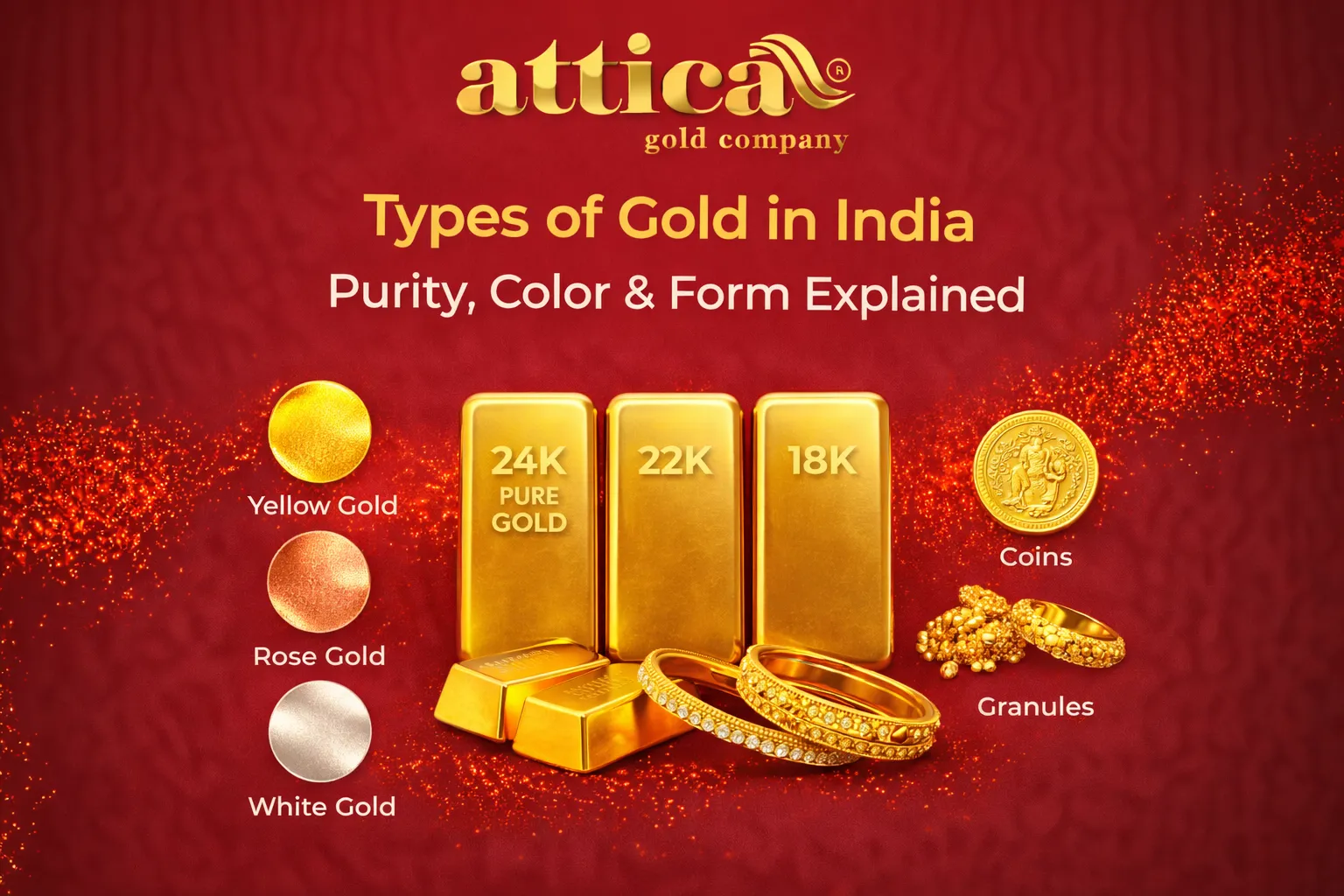
Types of Gold in India: Purity, Color & Form Explained
Gold is not just a precious metal in India. It is a symbol of tradition, financial security, and emotional value. From wedding jewellery and festive purchases to long-term investments and family heirlooms, gold plays multiple roles in Indian households. However, many buyers remain unaware that gold exists in different purities, colours, and forms. Understanding these variations helps buyers avoid confusion, overpaying, and poor resale decisions.
- Also Read: Live Gold Price Today
This guide explains Types of Gold in the simplest, most practical way, helping beginners and experienced buyers make informed, confident decisions.
How Many Types of Gold Are There in India?
Gold is broadly classified into three major categories:
- Based on purity (karat value)
- Based on color (alloy composition)
- Based on form (manufacturing and layering method)
Each classification affects price, durability, appearance, maintenance, and resale value. Let’s start with the most important classification—gold purity.
Types of Gold in India Based on Purity (Karat Guide)
Gold purity is measured in karats (K), representing the proportion of pure gold mixed with other metals. Pure gold is soft, so alloys are added to increase strength and usability.
| Gold Type | Purity | Gold Content | Best Used For |
| 24K Gold | 99.9% | Pure gold | Investment coins, bars |
| 22K Gold | 91.6% | Gold + silver/copper | Traditional Indian jewellery |
| 20K Gold | 83.3% | Gold + higher alloy mix | Durable jewellery, limited availability |
| 18K Gold | 75% | Gold + 25% base metals | Modern, designer jewellery |
| 14K Gold | 58.5% | Gold + alloy metals | Everyday wear jewellery |
| 10K Gold | 41.7% | Lowest legal standard | Budget jewellery (rare in India) |
Understanding Purity Choices
- 24K gold: Highest purity, best for investment, unsuitable for jewellery due to softness
- 22K gold: Ideal for Indian jewellery, combining purity with strength
- 20K gold: Offers better durability with high gold content, though less common
- 18K gold: Preferred for diamond-studded and modern designs
- 14K and 10K gold: Stronger, budget-friendly, but lower gold value
Choosing the right purity depends on usage purpose, durability needs, and resale expectations.
Types of Gold by Color
The gold color depends on the metals mixed with pure gold. These combinations create visually distinct shades while maintaining gold’s intrinsic value. Different colours suit different styles, lifestyles, and design preferences.
Yellow Gold
Among the many Gold Types available in India, yellow gold remains the most traditional and widely chosen option. It closely resembles natural gold, carries strong cultural significance, and is created by blending pure gold with silver and copper, resulting in durability, warm color, and timeless jewellery appeal worldwide admired.
Specialties of Yellow Gold
- Traditional appearance: Retains the classic golden hue associated with purity, rituals, and heritage, making it emotionally valuable for Indian families and ceremonial jewellery purchases.
- Cultural relevance: Deeply connected with weddings, festivals, and religious customs, symbolising prosperity, blessings, and long-term family wealth.
- Stable color tone: Maintains its natural shade without rhodium plating or frequent refinishing, unlike many modern gold color variants.
- Ease of maintenance: Can be polished, resized, and repaired easily without altering color consistency or structural strength.
- High resale acceptance: Widely trusted by jewellers, gold buyers, and lenders due to familiarity and standard purity recognition.
- Versatile purity options: Commonly available in 22K and 18K, allowing balance between purity, durability, and daily wear suitability.
Uses of Yellow Gold
- Bridal jewellery: Preferred for wedding necklaces, bangles, earrings, and traditional sets because of cultural symbolism and acceptance.
- Heirloom ornaments: Ideal for long-term ownership and passing jewellery across generations without design obsolescence.
- Daily traditional wear: Suitable for chains, rings, and bangles worn regularly due to durability and easy upkeep.
- Investment jewellery: Chosen for jewellery-based investment because of strong resale demand and trusted purity perception.
White Gold
Among modern Gold Types, white gold has gained strong popularity for its sleek, contemporary appearance. It is created by alloying gold with white metals like palladium or nickel, then coated with rhodium. This process gives white gold a bright finish resembling platinum, ideal for stylish, modern jewellery designs worldwide.
Specialties of White Gold
- Modern aesthetic: Offers a clean, silvery-white finish that complements contemporary fashion and minimalist jewellery preferences.
- Diamond enhancement: Reflective surface enhances the brilliance and sparkle of diamonds and gemstones set within jewellery.
- Improved durability: Alloy composition makes it stronger and more scratch-resistant than higher-purity yellow gold.
- Rhodium protection: Rhodium coating adds shine and provides resistance against tarnishing and surface wear.
- Lightweight comfort: Provides platinum-like appearance without excessive weight, improving comfort for long-term wear.
- Design flexibility: Easily supports intricate, geometric, and modern jewellery designs without compromising strength.
Uses of White Gold
- Engagement rings: Popular choice for diamond rings due to reflective shine and modern appeal.
- Wedding bands: Frequently selected for matching couple rings and contemporary wedding jewellery.
- Office jewellery: Suitable for daily professional wear due to subtle elegance and neutral appearance.
- Designer collections: Common in luxury and premium modern jewellery collections.
Rose Gold
Rose gold stands out among Types of Gold for its warm, romantic pink tone. Created by blending pure gold with copper, it offers both beauty and strength. This color has become a favourite in contemporary jewellery, especially among younger buyers seeking distinctive, fashionable designs that combine elegance with durability.
Specialties of Rose Gold
- Romantic hue: Soft pink color creates a warm, elegant appearance that feels unique yet timeless.
- Enhanced strength: Higher copper content improves durability and resistance to everyday wear and scratches.
- Low maintenance: Retains color naturally without surface plating or frequent refinishing.
- Skin tone compatibility: Complements a wide range of skin tones better than many other gold colours.
- Trend longevity: Maintains popularity across fashion cycles due to balanced classic and modern appeal.
- Affordable option: Often slightly more affordable than white gold due to simpler alloy composition.
Uses of Rose Gold
- Fashion rings: Commonly used in trendy rings and stackable jewellery designs.
- Bracelets and bangles: Preferred for stylish wrist jewellery with modern flair.
- Watches: Popular choice for premium watch cases and straps.
- Youth jewellery: Widely chosen by younger buyers for contemporary everyday accessories.
Green Gold
Green gold is one of the rarest Gold Types, created by alloying gold with silver or cadmium. It produces a subtle greenish tint that appears natural and understated. This unique shade is mostly used in artistic or vintage-inspired jewellery, appealing to buyers who appreciate unconventional designs and historical craftsmanship influences today.
Specialties of Green Gold
- Rare appearance: Distinct greenish hue sets it apart from mainstream gold colours.
- Artistic appeal: Often handcrafted for custom or heritage-inspired jewellery designs.
- Natural alloy tone: Color is created through metal composition, not surface treatment.
- Collector interest: Attracts niche collectors and jewellery enthusiasts seeking uniqueness.
- Limited availability: Not mass-produced, increasing exclusivity and uniqueness.
- Historical relevance: Used historically in decorative and ornamental jewellery styles.
Uses of Green Gold
- Vintage jewellery: Ideal for antique and heritage-style ornaments.
- Accent elements: Used selectively in multi-color gold jewellery designs.
- Custom pieces: Preferred for bespoke, artistic jewellery projects.
- Collector items: Appears in limited-edition or exhibition jewellery collections.
Blue Gold
Blue gold is an exotic variation among Gold Types, formed by alloying gold with indium or gallium. This creates a subtle bluish shade rarely seen in traditional jewellery. Due to its delicate structure and rarity, blue gold is mainly reserved for high-end designer pieces and experimental luxury jewellery creations worldwide today.
Specialties of Blue Gold
- Exotic color: Rare bluish tint offers striking visual distinction from traditional gold colours.
- Luxury appeal: Associated with high-end, avant-garde jewellery designs.
- Limited usage: Mostly produced in small quantities due to complex alloying process.
- Decorative role: Often used as accents rather than full jewellery pieces.
- Designer exclusivity: Commonly featured in custom and artistic collections.
- High rarity: Uncommon availability increases collector and luxury value.
Uses of Blue Gold
- Designer jewellery: Used in limited-edition luxury designs.
- Accent detailing: Adds contrast in multi-metal jewellery pieces.
- Custom projects: Preferred for experimental and artistic jewellery concepts.
- Showcase collections: Appears in exhibitions and designer showcases.
Purple Gold
Purple gold is a visually striking yet delicate member of the Gold Types family. Created by alloying gold with aluminium, it forms a rich violet hue. However, its brittle nature limits structural use, making it ideal mainly for decorative accents in luxury and artistic jewellery designs rather than full ornaments today.
Specialties of Purple Gold
- Vibrant color: Distinct purple tone adds dramatic visual appeal to jewellery.
- Decorative strength: Best used for accents rather than load-bearing components.
- Luxury association: Often featured in premium and artistic jewellery designs.
- Rare composition: Uncommon alloy formulation increases exclusivity.
- Aesthetic focus: Valued more for appearance than durability.
- Limited commercial use: Rarely used in mass-produced jewellery.
Uses of Purple Gold
- Accent elements: Used as decorative highlights in luxury jewellery.
- Art jewellery: Preferred for artistic and experimental designs.
- Limited editions: Appears in exclusive, designer collections.
- Statement pieces: Adds color contrast in bold jewellery designs.
Black Gold
Black gold is a bold and modern variation among Types of Gold, created through surface treatments or specialised alloying techniques. It is not naturally black but gains its color through advanced processing. This dramatic finish appeals to contemporary tastes and is commonly used in statement and designer jewellery pieces worldwide.
Specialties of Black Gold
- Bold appearance: Dark finish creates strong visual contrast and modern appeal.
- Surface treated: Color achieved through specialised processing techniques.
- Scratch resistance: Certain treatments improve surface durability.
- Modern styling: Popular in contemporary and masculine jewellery designs.
- Unique contrast: Enhances gemstones and metallic highlights effectively.
- Designer preference: Frequently used in avant-garde jewellery collections.
Uses of Black Gold
- Men’s jewellery: Commonly used for rings, bracelets, and chains.
- Statement pieces: Ideal for bold, eye-catching designs.
- Designer collections: Featured in modern luxury jewellery lines.
- Fashion jewellery: Used in trend-focused accessories.
Types of Gold by Form
Gold form refers to how gold is manufactured, layered, or structured. This classification directly impacts durability, price, maintenance, and resale value. Understanding different gold forms helps buyers avoid confusion between real value gold and decorative alternatives often mistaken for solid gold.
Solid Gold
Among all Gold Types, solid gold represents the highest value and authenticity. It is made entirely from gold alloy, such as 24K, 22K, 18K, or 14K, without surface coatings. Solid gold does not fade, peel, or lose color, making it ideal for long-term ownership, heirlooms, and genuine gold investment purposes.
Specialties of Solid Gold
- True gold value: Contains actual gold throughout the jewellery, ensuring intrinsic value remains intact regardless of surface wear or ageing.
- Long-lasting durability: Does not peel, fade, or expose base metals, making it suitable for decades of use.
- High resale acceptance: Easily accepted by gold buyers, lenders, and jewellers due to purity and transparency.
- Repair flexibility: Can be resized, polished, or repaired without damaging color or structure.
- Purity options: Available across multiple karats, allowing buyers to balance durability with gold content.
- Investment reliability: Retains value closely aligned with market gold prices over time.
Uses of Solid Gold
- Heirloom jewellery: Ideal for pieces intended to be passed down generations.
- Wedding ornaments: Preferred for bridal sets and traditional jewellery.
- Daily wear jewellery: Suitable in lower karats like 18K or 14K for durability.
- Gold-backed investments: Used for long-term wealth preservation.
Gold Plated
Gold plated jewellery is a decorative form among Gold Types, where a thin layer of gold is coated over a base metal. While it offers the appearance of gold at a lower cost, the gold content is minimal. Over time, the coating may wear off, reducing durability and resale value significantly.
Specialties of Gold Plated
- Affordable pricing: Offers gold-like appearance at a fraction of solid gold cost.
- Minimal gold content: Contains only a thin surface layer of gold.
- Limited durability: Gold coating can fade or peel with regular use.
- Fashion-focused: Designed primarily for style rather than long-term value.
- Lightweight feel: Comfortable for occasional wear due to low metal density.
- Low resale value: Not suitable for resale or gold loan purposes.
Uses of Gold Plated
- Fashion accessories: Suitable for trendy, short-term jewellery use.
- Occasional wear: Ideal for events where jewellery is worn infrequently.
- Budget purchases: Chosen when affordability is the primary concern.
- Costume jewellery: Used for styling without investment intent.
Gold Filled
Gold filled jewellery offers a balance between appearance and durability among Gold Types. It is made by mechanically bonding a thicker layer of gold over a base metal. This process makes it more durable than gold plated jewellery, though it still does not match the intrinsic value or resale potential of solid gold.
Specialties of Gold Filled
- Thicker gold layer: Contains more gold than plated jewellery, improving longevity.
- Improved durability: Gold layer does not rub off easily under normal use.
- Better appearance retention: Maintains gold-like finish longer than plated alternatives.
- Moderate pricing: More affordable than solid gold while offering better quality.
- Comfortable wear: Lightweight and suitable for regular fashion use.
- Limited resale: Not ideal for investment or gold loan valuation.
Uses of Gold Filled
- Everyday fashion jewellery: Suitable for frequent wear with care.
- Budget-conscious buyers: Chosen for balance between look and price.
- Stylish accessories: Used in modern, affordable jewellery designs.
- Gift jewellery: Popular for gifting without high investment cost.
Vermeil
Vermeil is a premium variation among Gold Types, created by coating sterling silver with gold. Unlike regular plating, it uses a higher-quality base metal, giving better durability and appearance. Vermeil jewellery offers the look and feel of gold at a lower cost, making it attractive for buyers seeking elegance without full solid gold pricing.
Specialties of Vermeil
- Sterling silver base: Uses high-quality silver instead of common base metals.
- Premium finish: Offers richer appearance compared to regular gold plating.
- Affordable elegance: Provides luxury look without solid gold cost.
- Better durability: More durable than standard plated jewellery.
- Lightweight comfort: Comfortable for extended wear.
- Fashion-oriented: Designed more for style than long-term investment.
Uses of Vermeil
- Premium fashion jewellery: Suitable for stylish daily or occasional wear.
- Gift items: Popular for elegant gifting options.
- Statement pieces: Used in bold, stylish designs.
- Budget luxury: Chosen by buyers wanting premium look at lower cost.
Final Thoughts
Understanding the different types of Gold in India by purity, color, and form allows buyers to make confident, informed decisions. Whether choosing solid gold for investment, coloured gold for style, or alternative forms for affordability, knowledge prevents costly mistakes. Always check purity, form, and documentation before buying or selling gold to protect both emotional and financial value.
Sell Any Type of Gold with Confidence at Attica Gold Company
No matter which gold type you own, such as solid gold jewellery, coins, bars, or even old ornaments, India’s No.1 gold buyers, Attica Gold Company, ensures transparent evaluation and fair market pricing. Using advanced purity testing methods and live gold rates, Attica Gold offers instant bank transfers with zero hidden deductions. Do not let your gold sit idle. Turn it into instant money with confidence.
FAQs
How many types of gold are available in India?
Gold types vary by purity, colour, and form, each affecting durability, price, and resale value. Purity defines gold content, colour reflects alloy composition, and form explains manufacturing method. Understanding these differences helps buyers choose jewellery suited for daily wear, weddings, or investment. Clear knowledge prevents overpaying, avoids low-resale products, and ensures informed decisions aligned with long-term financial goals and personal style preferences across Indian markets with evolving designs and changing consumer expectations today nationwide widely for buyers everywhere now securely.
Which gold purity is best for jewellery and investment?
24K gold is pure and ideal for investment, while 22K suits traditional jewellery. 18K and 14K offer strength for modern designs. Lower karats are durable but contain less gold. Selecting purity depends on usage, durability needs, and resale expectations. Investment buyers prefer higher purity, while daily wear benefits from stronger alloys balancing beauty and practicality across lifestyles budgets climates markets choices India today buyers compare rates certifications carefully always to maximize value long term and reduce risks for families nationwide.
Does gold colour affect its value and purity?
Gold colours change through alloying, not painting. Yellow uses silver and copper, white uses palladium or nickel, and rose uses copper. Colour affects appearance, maintenance, and design suitability but not intrinsic value. Buyers choose colours based on style preferences, skin tone compatibility, and jewellery purpose, ensuring durability, comfort, and long-term satisfaction without affecting gold content during resale loans gifting trends across markets India today designers innovate continuously for consumers seeking uniqueness balance affordability and reliability always over time nationwide securely.
What is the difference between solid gold and other gold forms?
Gold form explains how jewellery is made, such as solid, plated, filled, or vermeil. Solid gold retains value, while plated and filled focus on affordability. Form affects durability, resale, and loan acceptance. Understanding form helps buyers avoid confusing decorative jewellery with investment-grade gold, protecting money and expectations during long-term ownership across buying occasions markets generations India today through clear labeling education comparison and documentation for smarter safer decisions consistently over future years with confidence for households investors nationwide always secure.
How do different gold types affect resale value?
Purity, colour, and form influence resale differently. Higher purity and solid forms resell easily, while high making charges reduce returns. Certified jewellery improves trust and valuation. Buyers planning resale should prioritise standard purities, simple designs, and complete documentation to ensure fair pricing, faster transactions, and reduced deductions during selling or loan processing across Indian markets with changing demand cycles and varying buyer expectations nationwide today informed choices matter greatly for liquidity protection goals and financial flexibility over time securely now.
What should beginners know before buying gold?
Beginners should start by learning purity basics, recognising hallmarks, and understanding cost components beyond the gold rate. Comparing sellers, asking for detailed bills, and choosing appropriate gold types reduces risk. Clear goals whether investment or adornment guide better choices. Knowledge transforms gold buying into a disciplined, rewarding financial decision rather than an emotional purchase across cultures budgets and life stages in India with evolving market standards today buyers benefit greatly from preparation and patience for lasting value and confidence always now.